1. “Facts” from “The Da Vinci Code”
Wright writes” I only know well one of the buildings which features in the book, namely Westminster Abbey. All right, Brown knows where the Isaac Newton monument is. But he still makes gaffe after gaffe which could have been corrected by 10 minutes of walking around with his eyes open. The Abbey has towers, not spires. You cannot see Parliament from St James’s Park. College Garden is an extremely private place, not “a very public place” outside the Abbey’s walls (527). You cannot look out into it from the Chapter House; nor is there a “long hallway” leading to the latter, with a “heavy wooden door” at the end (529 ff.). Ten minutes’ observation by a junior research assistant could have put all this right. If Brown is so careless, and carelessly inventive, in details as easy to check as those, why should we trust him in anything else?”
2. The Priory of Sion
The Da Vinci Code states under “FACT” states: “The Prior of Sion- a European secret society founded in 1099-is a real organization. In 1975 Paris’s Bioliotheque Nationale discovered parchments known as Les Dossiers Secrets, identifying numerous members of the Priory of Sion, including Sir Isaac Newton, Botticelli, Victor Hugo, and Leonardo da Vinci.”
Wright states “And when it comes, second, to the Priory of Sion, the documents which Brown, following Baigent and Leigh, cite as evidence were forgeries cooked up by three zany Frenchmen in the 1950s. They cheerfully confessed to this in a devastating television program shown on British television in February this year”
3. Secret Symbols in Da Vinci's paintings?
Wright states “And as for Brown’s theory about Da Vinci’s "Last Supper," according to which the Beloved Disciple next to Jesus is actually a woman, that he/she and Jesus are joined at the hip, that they are sitting in such a way as to display the letter V, apparently a sign of femininity, and also the letter M, for Mary, or Magdalene, or marriage, or something else, this is pure fantasy. You can take any great painting and play this kind of game with it. That’s not to say that some painters may not have implanted coded messages in their work. It would be surprising if they didn’t. But you won’t find too many serious art critics giving Brown’s reading of the painting more than a passing smile”
Monday, April 10, 2006

Sunday, April 09, 2006



Saturday, April 08, 2006
The Da Vinci Code Part 1

Outside of theology books, I don't read very much, in fact, I can't remember the last time I read a novel (I tried reading "The Pilgrim Progress", a year ago but I never finished- I know I am an embarrassment to all who declares to be called "Reformed"). So after 3 weeks, I finally finished my first novel since college, and the book happened to be "The Da Vinci Code" by Dan Brown, which I read in order to prepare FPC with the challenges that will come from the movie, premiering in May.
Well first of all, I did find the book to be riveting and exciting, as I followed the two main characters (Robert and Sophie) on the quest for the Holy Grail, and with it all the secrets of "who Jesus Christ really is". But as the book began to unfold its idea of Jesus (according to Dan Brown), it became clear to me, that this book is and will be very dangerous to the Christian faith because it creates so much suspicion toward the historic Christ, revealed in the Bible
In these series of post, I want to cite some of the book's challenges towards orthodox Christianity, and then supply an answer to them by quoting Bishop (Tom) Wright's, a renowned New Testament scholar, article, "Decoding The Da Vinci Code".*
*http://www.spu.edu/depts/uc/response/summer2k5/features/davincicode.asp
Friday, April 07, 2006
Gospel of Judas
Well yesterday, some scholars revealed the Gospel of Judas and with it the controversial new perspective on Judas. USA Today writes "With a plot twist worthy of The Da Vinci Code, the gospel - 13 papyrus sheets bound in leather and found in a cave in Egypt - purports to relate the last days of Jesus' life, from the viewpoint of Judas, one of Jesus' first followers. Christians teach that Judas betrayed Jesus for 30 pieces of silver, but in this gospel, he is the hero, Jesus' most senior and trusted disciple and the only one who knows Jesus' true identity as the son of God. ".
How should FPC react and how we should respond? I don't have the time to address all the issues right now, but this weekend (hopefully), I'll post some answers and resources on how we should think and respond to the "The Da Vinci Code" and all of it's assertion and susipion it creates toward to orthodox view of Christ, which will also help us deal with the Gospel of Judas and other Gnostic Gospels.
For now check out Al Mohler's view of the Gospel of Judas:
http://www.albertmohler.com/radio_list.php
see http://channel.nationalgeographic.com/channel/gospelofjudas/
How should FPC react and how we should respond? I don't have the time to address all the issues right now, but this weekend (hopefully), I'll post some answers and resources on how we should think and respond to the "The Da Vinci Code" and all of it's assertion and susipion it creates toward to orthodox view of Christ, which will also help us deal with the Gospel of Judas and other Gnostic Gospels.
For now check out Al Mohler's view of the Gospel of Judas:
http://www.albertmohler.com/radio_list.php
see http://channel.nationalgeographic.com/channel/gospelofjudas/
Friday, March 31, 2006
N.T. Wright's "Paul in Flesh Perspective"
On the Reformation21 website, Jonathan Worthington has written a good and fair book review of N.T. Wright's "Paul in Flesh Perspective".
See link below:
http://reformation21.org/Shelf_Life_/Shelf_Life_/166/?vobId=2621&pm=392
See link below:
http://reformation21.org/Shelf_Life_/Shelf_Life_/166/?vobId=2621&pm=392
Thursday, March 30, 2006
Atheist and Church Membership in the PCUSA
Pastor Brown of "Classical Presbyterian blog" has written a great article on Pastor Rigby, the pastor of St. Andrew Church in Austin, who knowingly admitted an atheist (he is a UT professor) into his congregation.
You can find the article here:
http://classicalpresbyterian.blogspot.com/
You can find the article here:
http://classicalpresbyterian.blogspot.com/
Monday, March 27, 2006
"For Now We Live": Thessalonians 3:5-10
5For this reason, when I could bear it no longer, I sent to learn about your faith, for fear that somehow the tempter had tempted you and our labor would be in vain. 6But now that Timothy has come to us from you, and has brought us the good news of your faith and love and reported that you always remember us kindly and long to see us, as we long to see you-- 7for this reason, brothers,[b] in all our distress and affliction we have been comforted about you through your faith. 8For now we live, if you are standing fast in the Lord. 9For what thanksgiving can we return to God for you, for all the joy that we feel for your sake before our God, 10as we pray most earnestly night and day that we may see you face to face and supply what is lacking in your faith?
1. One of Paul's greatest passion is God's glory in and through the perseverance of faith in his followers. Paul was so concerned for the Thessalonians' faith that he sends Timothy, his friend, to check up on them (v. 5).
5For this reason, when I could bear it no longer, I sent to learn (Timothy) about your faith, for fear that somehow the tempter had tempted you and our labor would be in vain.
2. The news of the people's strong faith was so wonderful for Paul, that it helps comfort him in his sufferings (v.6-7).
6But now that Timothy has come to us from you, and has brought us the good news of your faith and love and reported that you always remember us kindly and long to see us, as we long to see you-- 7for this reason, brothers,[b] in all our distress and affliction we have been comforted about you through your faith
3. In verse 8, Paul's passion for the Thessalonians' faith is clearly seen, as he describes the condition of him feeling "alive", that is, if they"stand fast in the Lord". Paul is stating that the joy and happiness in his life is contingent on their perseverance in faith and without it he would probably consider himself "dead".
8For now we live, if you are standing fast in the Lord
4. In verse 9-10, Paul is not only excited about the Thessalonians' faith, but he is also happy that he will be able to thank God for their faith in prayer, an activity he does constantly.
9For what thanksgiving can we return to God for you, for all the joy that we feel for your sake before our God, 10as we pray most earnestly night and day that we may see you face to face and supply what is lacking in your faith?
5. So FPC, what makes you happy or sad? Does the perseverance of your fellow Christian's faith have any impact on how you feel? Or are you content with just your own individual faith, giving no thought or concern about anyone else's?
May God allow us to find our happiness in other people's faith, so that we can enjoy Christ more,
dan
1. One of Paul's greatest passion is God's glory in and through the perseverance of faith in his followers. Paul was so concerned for the Thessalonians' faith that he sends Timothy, his friend, to check up on them (v. 5).
5For this reason, when I could bear it no longer, I sent to learn (Timothy) about your faith, for fear that somehow the tempter had tempted you and our labor would be in vain.
2. The news of the people's strong faith was so wonderful for Paul, that it helps comfort him in his sufferings (v.6-7).
6But now that Timothy has come to us from you, and has brought us the good news of your faith and love and reported that you always remember us kindly and long to see us, as we long to see you-- 7for this reason, brothers,[b] in all our distress and affliction we have been comforted about you through your faith
3. In verse 8, Paul's passion for the Thessalonians' faith is clearly seen, as he describes the condition of him feeling "alive", that is, if they"stand fast in the Lord". Paul is stating that the joy and happiness in his life is contingent on their perseverance in faith and without it he would probably consider himself "dead".
8For now we live, if you are standing fast in the Lord
4. In verse 9-10, Paul is not only excited about the Thessalonians' faith, but he is also happy that he will be able to thank God for their faith in prayer, an activity he does constantly.
9For what thanksgiving can we return to God for you, for all the joy that we feel for your sake before our God, 10as we pray most earnestly night and day that we may see you face to face and supply what is lacking in your faith?
5. So FPC, what makes you happy or sad? Does the perseverance of your fellow Christian's faith have any impact on how you feel? Or are you content with just your own individual faith, giving no thought or concern about anyone else's?
May God allow us to find our happiness in other people's faith, so that we can enjoy Christ more,
dan
Wednesday, March 22, 2006
Discovering God's Will by Dr. Sinclair B. Ferguson
Here's my summary:
1. Is it Lawful?
"...no action which is contrary to the plain word of God can ever be legitimate for the Christian. No appeal to spiritual freedom or to providential circumstances can ever make what is ethically wrong anything else but sinful. For the Christian is free only to love and obey the law of God. Therein lies his true freedom."
2. Is it Beneficial For Me?
"The question I must learn to ask is: Will it bring benefits, as far as I am able to judge, so that my relationship to the Lord Jesus Christ is strengthened? Will it draw me nearer to Him?"
3. Is it Enslaving?
"The Christian should develop in Christ a sensitivity to those things to which he will most readily allow himself to be brought into bondage. "Will this enslave me?" will be a question never far from his thinking. "I will not be mastered by anything" is a good motto text for the man who has received a spirit of self-discipline [2 Tim 1:7]."
4. Is it Consistent with Christ's Lordship?
"We do take Christ there. As those who are united to him we cannot leave him behind. So the real question is: Can I take Christ there and look him in the face without shame? Is this course of action, this decision I am taking, totally consistent with my personal confession that "Jesus Christ is my Lord"?"
5. Is it Helpful For Others?
"I must not rest content with asking whether a course of action will be personally helpful. Will it have a like beneficial effect on others? Indeed, do I engage in it with a view to serving and helping them?"
6. Is it Consistent with Biblical Example?
"We are not left to our own imagination in dealing with this question. The only Christ we know - for that matter the only Paul we know - is to be found in the pages of Scripture. Here again we are driven back to our great principle: we discover the will of God by a sensitive application of Scripture to our own lives."
7. Is it for the Glory of God (I am living for the Glory of God?)
"... Paul cannot escape from the ultimate challenge, "whatever you do, do it all for the glory of God" [1 Cor 10:31]. We cannot escape this challenge either. It is the non-negotiable norm of Christian living. If my heart goes out for His glory, then I will find the yoke of these questions easy, and the burden of gospel holiness to which they urge me is light indeed:"
Summary
"Is it lawful? Is it beneficial? Is it enslaving? Is it consistent with the Lordship of Christ? Is it beneficial to others? Is it consistent with the example of Christ and the apostles? Is it for the glory of God? For that matter, am I living for the glory of God?"
The full-length article can be found here:
http://www.monergism.com/thethreshold/articles/onsite/godswill.html
1. Is it Lawful?
"...no action which is contrary to the plain word of God can ever be legitimate for the Christian. No appeal to spiritual freedom or to providential circumstances can ever make what is ethically wrong anything else but sinful. For the Christian is free only to love and obey the law of God. Therein lies his true freedom."
2. Is it Beneficial For Me?
"The question I must learn to ask is: Will it bring benefits, as far as I am able to judge, so that my relationship to the Lord Jesus Christ is strengthened? Will it draw me nearer to Him?"
3. Is it Enslaving?
"The Christian should develop in Christ a sensitivity to those things to which he will most readily allow himself to be brought into bondage. "Will this enslave me?" will be a question never far from his thinking. "I will not be mastered by anything" is a good motto text for the man who has received a spirit of self-discipline [2 Tim 1:7]."
4. Is it Consistent with Christ's Lordship?
"We do take Christ there. As those who are united to him we cannot leave him behind. So the real question is: Can I take Christ there and look him in the face without shame? Is this course of action, this decision I am taking, totally consistent with my personal confession that "Jesus Christ is my Lord"?"
5. Is it Helpful For Others?
"I must not rest content with asking whether a course of action will be personally helpful. Will it have a like beneficial effect on others? Indeed, do I engage in it with a view to serving and helping them?"
6. Is it Consistent with Biblical Example?
"We are not left to our own imagination in dealing with this question. The only Christ we know - for that matter the only Paul we know - is to be found in the pages of Scripture. Here again we are driven back to our great principle: we discover the will of God by a sensitive application of Scripture to our own lives."
7. Is it for the Glory of God (I am living for the Glory of God?)
"... Paul cannot escape from the ultimate challenge, "whatever you do, do it all for the glory of God" [1 Cor 10:31]. We cannot escape this challenge either. It is the non-negotiable norm of Christian living. If my heart goes out for His glory, then I will find the yoke of these questions easy, and the burden of gospel holiness to which they urge me is light indeed:"
Summary
"Is it lawful? Is it beneficial? Is it enslaving? Is it consistent with the Lordship of Christ? Is it beneficial to others? Is it consistent with the example of Christ and the apostles? Is it for the glory of God? For that matter, am I living for the glory of God?"
The full-length article can be found here:
http://www.monergism.com/thethreshold/articles/onsite/godswill.html
Cost of Being a Christian
Being a Christian in America appears to be easy in comparison to stories like Abdul Rahman, who maybe sentence to death in Afghanistan for being a Christian. CNN website writes: "Rahman, a father of two, was arrested and is on trial for rejecting Islam. The Afghan constitution, which is based on Sharia, or Islamic law, says that apostates can receive the death penalty...He had been arrested after telling local police, whom he approached on an unrelated matter, that he had converted to Christianity. Reports say he was carrying a Bible at the time. He said he converted to Christianity 16 years ago after working with a Christian aid group that assisted refugees in neighboring Pakistan"
May we pray for Adul Rahman's safety and that Afghan govt will do the right thing and give their people religious freedom.
dan
May we pray for Adul Rahman's safety and that Afghan govt will do the right thing and give their people religious freedom.
dan
Tuesday, March 14, 2006
Spahr, Homosexuality and PCUSA
On March 3, Rev. Jane Spahr was found not guilty by the Permanent Judicial Commission of Rebwoods Presbytery for marrying two lesbian couples.
The PCUSA news writes: The presbytery’s judicial commission ruled 6-1 that Spahr was acting within her “right of conscience” in 2004 and 2005 when she performed same-sex unions for the couples. The PJC added, in its majority opinion: “We also find that the accused acted within the normative standards of Redwoods Presbytery, faithfully reporting to it her activities at reasonable intervals.”
Currently PCUSA allows pastors to "bless" same sex unions, but forbids calling them marriage. The PCUSA news states: "The case against Spahr, a member of Redwoods Presbytery for more than a quarter-century, alleged that she violated her ordination vows and the PC(USA)Constitution by performing the same-sex marriages. The Book of Order (section W-4.9001) states that marriage is and can only be a covenant between a man and a woman. The highest Presbyterian court, the Permanent Judicial Commission of the General Assembly, ruled in 2000 that ministers may bless same-sex “unions,” but cannot confuse or equate them with marriage. Friday’s ruling was a departure from that provision."
The thing that frightens me, is Rev. Spahr 's rationale in violating her ordination vows. She states according to PCUSA news:“This historic ruling means that as a minister I can exercise my conscience to marry two people who have demonstrated their commitment to love, honor and cherish one another.” And to have the Rebwoods Presbytery honor this reason over against the clear teaching of scripture and the laws of the denomination is even more disturbing.
Al Mohler, President of Southern Seminary, reacting towards the Redwoods ruling states: "By any measure, the acquittal of Rev. Spahr should demonstrate that a call for all ministers to bind their consciences "by the witness of Scripture," does not avail. The presbytery of the Redwoods did nothing to require Rev. Spahr to subject her conscience to the constitutional bounds of the church or to the clear teachings of the Bible."
So what does this mean for FPC? I believe this is a call for the leaders of FPC to educate themselves on the issues involved and to respond in some fashion, regardless of the immediate impact on our church because we are united covenantally to a larger entity, that is, we are part of PCUSA denomination.
Finally, it is the writer's opinion that PCUSA has failed in protecting and upholding the gospel, thus committing a serious sin. I believe this to be truth, on grounds that PCUSA has consistently failed to discipline those that have openly abandoned the clear teaching of scripture and rules of the denomination, thus failing to protect the gospel. Scripture is clear that those who do not obey God's commandments are not true believers. The Bible states:" 3And by this we know that we have come to know him, if we keep his commandments. 4Whoever says "I know him" but does not keep his commandments is a liar, and the truth is not in him, 5but whoever keeps his word, in him truly the love of God is perfected. By this we may be sure that we are in him: 6whoever says he abides in him ought to walk in the same way in which he walked" (1 John 2:3-6 (ESV)). And to have a denomination fail to obey God's commandment of disciplining those who would reject the rule of scripture and church governance, gives reasonable evidence of its own grave sin.
It is my opinion that FPC leaders should seriously consider the option of leaving the PCUSA. And I do not make this comment lightly, knowing the difficulties of leaving a denomination and the importance of unity (John 17), but it's my opinion that within PCUSA there are many apostate (false) churches, who are not being disciplined (and appears that they never will be), thus obligating FPC to take charge of it's own responsibilities of not being”yoked together with nonbelievers" (2 Corinthians 6:14).
For more information on PCUSA news:
1. http://www.presbyweb.com/
2. http://www.layman.org/
3. http://www.albertmohler.com/commentary_read.php?cdate=2006-03-08
4. http://www.pcusa.org/pcnews/
The PCUSA news writes: The presbytery’s judicial commission ruled 6-1 that Spahr was acting within her “right of conscience” in 2004 and 2005 when she performed same-sex unions for the couples. The PJC added, in its majority opinion: “We also find that the accused acted within the normative standards of Redwoods Presbytery, faithfully reporting to it her activities at reasonable intervals.”
Currently PCUSA allows pastors to "bless" same sex unions, but forbids calling them marriage. The PCUSA news states: "The case against Spahr, a member of Redwoods Presbytery for more than a quarter-century, alleged that she violated her ordination vows and the PC(USA)Constitution by performing the same-sex marriages. The Book of Order (section W-4.9001) states that marriage is and can only be a covenant between a man and a woman. The highest Presbyterian court, the Permanent Judicial Commission of the General Assembly, ruled in 2000 that ministers may bless same-sex “unions,” but cannot confuse or equate them with marriage. Friday’s ruling was a departure from that provision."
The thing that frightens me, is Rev. Spahr 's rationale in violating her ordination vows. She states according to PCUSA news:“This historic ruling means that as a minister I can exercise my conscience to marry two people who have demonstrated their commitment to love, honor and cherish one another.” And to have the Rebwoods Presbytery honor this reason over against the clear teaching of scripture and the laws of the denomination is even more disturbing.
Al Mohler, President of Southern Seminary, reacting towards the Redwoods ruling states: "By any measure, the acquittal of Rev. Spahr should demonstrate that a call for all ministers to bind their consciences "by the witness of Scripture," does not avail. The presbytery of the Redwoods did nothing to require Rev. Spahr to subject her conscience to the constitutional bounds of the church or to the clear teachings of the Bible."
So what does this mean for FPC? I believe this is a call for the leaders of FPC to educate themselves on the issues involved and to respond in some fashion, regardless of the immediate impact on our church because we are united covenantally to a larger entity, that is, we are part of PCUSA denomination.
Finally, it is the writer's opinion that PCUSA has failed in protecting and upholding the gospel, thus committing a serious sin. I believe this to be truth, on grounds that PCUSA has consistently failed to discipline those that have openly abandoned the clear teaching of scripture and rules of the denomination, thus failing to protect the gospel. Scripture is clear that those who do not obey God's commandments are not true believers. The Bible states:" 3And by this we know that we have come to know him, if we keep his commandments. 4Whoever says "I know him" but does not keep his commandments is a liar, and the truth is not in him, 5but whoever keeps his word, in him truly the love of God is perfected. By this we may be sure that we are in him: 6whoever says he abides in him ought to walk in the same way in which he walked" (1 John 2:3-6 (ESV)). And to have a denomination fail to obey God's commandment of disciplining those who would reject the rule of scripture and church governance, gives reasonable evidence of its own grave sin.
It is my opinion that FPC leaders should seriously consider the option of leaving the PCUSA. And I do not make this comment lightly, knowing the difficulties of leaving a denomination and the importance of unity (John 17), but it's my opinion that within PCUSA there are many apostate (false) churches, who are not being disciplined (and appears that they never will be), thus obligating FPC to take charge of it's own responsibilities of not being”yoked together with nonbelievers" (2 Corinthians 6:14).
For more information on PCUSA news:
1. http://www.presbyweb.com/
2. http://www.layman.org/
3. http://www.albertmohler.com/commentary_read.php?cdate=2006-03-08
4. http://www.pcusa.org/pcnews/
Monday, March 13, 2006
Grizzly Man
The Grizzly Man is a 2005 documentary film about Timothy Treadwell, an environmentalist, who spends 13 summer seasons living with bears in the Alaska, in order to study and thus educate the world about bears. In 2003, Timothy and his girlfriend were attacked and killed by a bear.
This film gives a unique and rare view of human contacts with bears and other animals. It was real cool to see how Timothy interacts closely with ten-foot bears and little foxes, despite his exotic and weird behavior towards them (Throughout the film, Timothy gives all the animals a name, and frequently tells the animals in repetitive fashion, I love you... I love you...I love you)
I came away sad after watching the film. It was depressing to see a man devote some much energy and time to a cause that seemed small in comparison to cause of Christ. It was also discouraging to see a man exalt and elevate the value of animals to the level of humans by trying to treat and reason with them like people.
So let us be concerned about animal and environmental issues, but let us never elevate the value of animals over people, who are made in God image.
Friday, March 10, 2006
Debate on Infant Baptism Part 3
Case for Believer's Baptism by Geoff Chang
1. In the OT, God promised a coming New Covenant (Ezekiel 11, 36; Jer. 31) which would be radically different from the current state of the nation of Israel, involving a new heart being given to men. In the New Testament, we see this aspect of the New Covenant powerfully taught in several different ways, such as being born again (John 3:3), being made alive (Eph. 2:5), and opening blind eyes (2 Cor. 4:6). Another term for all this is regeneration.
2. The death and resurrection of Christ has inaugurated the New Covenant (Luke 22:20), which replaced the Old Covenant (Heb. 8:13)
3. Christ instituted two sacraments as signs of this New Covenant: the Lord's Supper and Baptism.
4. Baptism is to be an external sign of this New Covenant, namely repentance and faith, resulting in the inward reality of regeneration.
5. Therefore, only those who have experienced regeneration (believers) should be baptized.
A Few Arguments for Believer's Baptism
1. In the OT passages prophesying the coming kingdom, the single aspect most powerfully highlighted is regeneration (see Ezek. 11, 36, Jer. 31). This is the key difference that exists between the Old Covenant and the New Covenant. This points to regeneration being the key indicator of those in the New Covenant.
2. The teaching of the New Testament is that all who experience regeneration will come to faith in Christ. Therefore, regeneration will only have happened in the lives of believers.
3. Baptism is taught by John the Baptist as a "baptism of repentance for the forgiveness of sins" (Mk. 1:4, Lk. 3:3). This is not to say that baptism forgives sin, but that baptism is a sign of repentance which results in forgiveness of sins, namely believer's baptism.
4. Baptism throughout the New Testament (in the book of Acts) is practiced only when the following conditions are met: 1) the Gospel is preached, 2) the Gospel is heard, 3) the Gospel is believed. This is the practice of the apostles given to us.
5. Paul teaches that those who have been baptized have been buried with Christ in his death and given newness of life (Rom. 6:3-4, Col. 2:12). If the act of baptism does not itself save, then this only makes sense if only believers baptized.
6. Paul often appeals in his teaching to the Christians to remember their baptism and the significance of it. Only for those baptized as professing Christians can this instruction have any meaning (how can those baptized as infants remember their baptism?).
7. Paul teaches that there is a spiritual reality in our baptism that unites us into one body (i.e. the body of Christ, the invisible church) and one Spirit. This is only possible in believer's baptism, which only allows those in the body of Christ to be baptized.
8. Those who are baptized into Christ are said to "have clothed (past tense) yourselves with Christ" (Gal. 3:27). Being clothed with Christ is a description given only to believers.
Personal Obstacles for Embracing Believer's Baptism
None
Resources:
1 - Brothers, Magnify the Meaning of Baptism - Piper http://www.desiringgod.org/library/topics/leadership/ brothers_baptism.html
How do Circumcision and Baptism Correspond? - Piper http://www.desiringgod.org/library/sermons/99/082999.html
2- Southern Baptist Journal of Theology Vol. 2, No. 1, Spring 1998 - The Doctrines of Baptism and Assurance "Baptism and Becoming a Christian in the New Testament" - Stein "Baptist Principles Reset: Believer's Baptism" - Jeter http://www.sbts.edu/resources/publications/sbjt/1998Spring.php
3 - "The Incomparable Glory of Fish Vomit: Baptism, the Great Commission and the End of the Age" - Moore http://www.sbts.edu/MP3/spring2006/20060202moore.mp3
4 - Baptism: A Matter of Obedience - MacArthur http://www.biblebb.com/files/MAC/BAPTISMAC.HTM
5 - Baptism - A Burial http://www.spurgeon.org/sermons/1627.htm
1. In the OT, God promised a coming New Covenant (Ezekiel 11, 36; Jer. 31) which would be radically different from the current state of the nation of Israel, involving a new heart being given to men. In the New Testament, we see this aspect of the New Covenant powerfully taught in several different ways, such as being born again (John 3:3), being made alive (Eph. 2:5), and opening blind eyes (2 Cor. 4:6). Another term for all this is regeneration.
2. The death and resurrection of Christ has inaugurated the New Covenant (Luke 22:20), which replaced the Old Covenant (Heb. 8:13)
3. Christ instituted two sacraments as signs of this New Covenant: the Lord's Supper and Baptism.
4. Baptism is to be an external sign of this New Covenant, namely repentance and faith, resulting in the inward reality of regeneration.
5. Therefore, only those who have experienced regeneration (believers) should be baptized.
A Few Arguments for Believer's Baptism
1. In the OT passages prophesying the coming kingdom, the single aspect most powerfully highlighted is regeneration (see Ezek. 11, 36, Jer. 31). This is the key difference that exists between the Old Covenant and the New Covenant. This points to regeneration being the key indicator of those in the New Covenant.
2. The teaching of the New Testament is that all who experience regeneration will come to faith in Christ. Therefore, regeneration will only have happened in the lives of believers.
3. Baptism is taught by John the Baptist as a "baptism of repentance for the forgiveness of sins" (Mk. 1:4, Lk. 3:3). This is not to say that baptism forgives sin, but that baptism is a sign of repentance which results in forgiveness of sins, namely believer's baptism.
4. Baptism throughout the New Testament (in the book of Acts) is practiced only when the following conditions are met: 1) the Gospel is preached, 2) the Gospel is heard, 3) the Gospel is believed. This is the practice of the apostles given to us.
5. Paul teaches that those who have been baptized have been buried with Christ in his death and given newness of life (Rom. 6:3-4, Col. 2:12). If the act of baptism does not itself save, then this only makes sense if only believers baptized.
6. Paul often appeals in his teaching to the Christians to remember their baptism and the significance of it. Only for those baptized as professing Christians can this instruction have any meaning (how can those baptized as infants remember their baptism?).
7. Paul teaches that there is a spiritual reality in our baptism that unites us into one body (i.e. the body of Christ, the invisible church) and one Spirit. This is only possible in believer's baptism, which only allows those in the body of Christ to be baptized.
8. Those who are baptized into Christ are said to "have clothed (past tense) yourselves with Christ" (Gal. 3:27). Being clothed with Christ is a description given only to believers.
Personal Obstacles for Embracing Believer's Baptism
None
Resources:
1 - Brothers, Magnify the Meaning of Baptism - Piper http://www.desiringgod.org/library/topics/leadership/ brothers_baptism.html
How do Circumcision and Baptism Correspond? - Piper http://www.desiringgod.org/library/sermons/99/082999.html
2- Southern Baptist Journal of Theology Vol. 2, No. 1, Spring 1998 - The Doctrines of Baptism and Assurance "Baptism and Becoming a Christian in the New Testament" - Stein "Baptist Principles Reset: Believer's Baptism" - Jeter http://www.sbts.edu/resources/publications/sbjt/1998Spring.php
3 - "The Incomparable Glory of Fish Vomit: Baptism, the Great Commission and the End of the Age" - Moore http://www.sbts.edu/MP3/spring2006/20060202moore.mp3
4 - Baptism: A Matter of Obedience - MacArthur http://www.biblebb.com/files/MAC/BAPTISMAC.HTM
5 - Baptism - A Burial http://www.spurgeon.org/sermons/1627.htm
Thursday, March 09, 2006
Debate on Infant Baptism Part 2
Case for Infant Baptism
1. Throughout the Old Testament (OT), God made covenants (agreements) with families, as shown in the covenant with Abraham. (Genesis 17:9)
2. In the OT, every member, including infants received the covenant sign of membership (circumcision) (Genesis 17:10)
3. In the New Covenant of Christ (Luke 22:20), it appears that God continues to make this covenant with believers and their families.
4. Therefore every member should receive the New Covenant sign of baptism; include infants (Col. 2:12-13, Romans 4).
Arguments for Infant Baptism
1. In the OT, God's covenant with Abraham in which the New Covenant was build on and fulfilled (Gal. 3:16-17), includes promises made not only to Abraham but his descendants, including infants. In following the pattern of the covenant with Abraham, the New Covenant promises appears to be extended directly to believer's children in Acts 2:39
2. Throughout the OT, God's covenant always has a corporate aspect to it. (Covenant with Adam (1 Co. 15:22), Covenant with Noah (Gen. 9:15), Covenant with Abraham (Gen 17:9), Mosaic Covenant (Deu. 7:9) and Davidic Covenant (Psalm 89:3). (3)
3. Throughout the gospels, Jesus blesses children, embraces them, and states that they belong to the kingdom of God. (Matt 19:13-15; Mark 10:13-16; and Luke 18:15-17)
4. In 1 Corinthians 7:14, Paul declares that believer's children are considered "holy", or set a part, even though only one parent is a believer.
5. In the 1st Century, I believe that the people, especially the Jewish people, would have been shocked to hear that when the head of the household came to faith in Christ and enter into the New Covenant, that the rest of the household was excluded. (5)
6. Throughout the N.T., there are passages stating that "households" were baptized, which give reasonable evidence that infants were baptized (Acts 11:14, 16:15, 33, 18:8, and 1 Corinthians1:16).
Personal Obstacles for Embracing Believer's Baptism
My largest obstacle in embracing infant baptism, is the argument that the New Covenant includes only regenerated people (true believers) (which Jeremiah 31 seem to indicate), therefore it would be inappropriate to baptized infants, who are not necessary regenerated. My answers to this argument are:
1. Jeremiah 31 deals with a future state of the New Covenant therefore it doesn't indicate that there can only be true believers in the covenant in the present. (4)
2. The apostate passages (John 15, Heb. 6, 10::29-30) appears to indicate that there are unbelievers in the New Covenant
3. In OT, believer's infant received the sign of the covenant even though they were not all regenerate (Rom. 4, Genesis 17:9)
Resources for Infant Baptism:
(1) John Murray’s book “Christian Baptism”
(2) Gregg Strawbridge’s article, “Covenantal Infant Baptism: An Outlined Defense” See: http://www.wordmp3.com/gs/baptism.htm
(3) R. Scott Clark’s article, “A Contemporary Reformed Defense of Infant Baptism” See:
http://www.wscal.edu/clark/baptism.php
(4) Dr. Richard Pratt’s article, “Jeremiah 31: Infant Baptism in the New Covenant” See: http://www.thirdmill.org/files/english/html/th/ TH.h.Pratt.New.Covenant.Baptism.html
(5) Vern Poythress’s article, “Linking Small Children with Infants in the Theology of Baptizing” See: http://www.frame-poythress.org/poythress_articles/ 1997Linking.htm
1. Throughout the Old Testament (OT), God made covenants (agreements) with families, as shown in the covenant with Abraham. (Genesis 17:9)
2. In the OT, every member, including infants received the covenant sign of membership (circumcision) (Genesis 17:10)
3. In the New Covenant of Christ (Luke 22:20), it appears that God continues to make this covenant with believers and their families.
4. Therefore every member should receive the New Covenant sign of baptism; include infants (Col. 2:12-13, Romans 4).
Arguments for Infant Baptism
1. In the OT, God's covenant with Abraham in which the New Covenant was build on and fulfilled (Gal. 3:16-17), includes promises made not only to Abraham but his descendants, including infants. In following the pattern of the covenant with Abraham, the New Covenant promises appears to be extended directly to believer's children in Acts 2:39
2. Throughout the OT, God's covenant always has a corporate aspect to it. (Covenant with Adam (1 Co. 15:22), Covenant with Noah (Gen. 9:15), Covenant with Abraham (Gen 17:9), Mosaic Covenant (Deu. 7:9) and Davidic Covenant (Psalm 89:3). (3)
3. Throughout the gospels, Jesus blesses children, embraces them, and states that they belong to the kingdom of God. (Matt 19:13-15; Mark 10:13-16; and Luke 18:15-17)
4. In 1 Corinthians 7:14, Paul declares that believer's children are considered "holy", or set a part, even though only one parent is a believer.
5. In the 1st Century, I believe that the people, especially the Jewish people, would have been shocked to hear that when the head of the household came to faith in Christ and enter into the New Covenant, that the rest of the household was excluded. (5)
6. Throughout the N.T., there are passages stating that "households" were baptized, which give reasonable evidence that infants were baptized (Acts 11:14, 16:15, 33, 18:8, and 1 Corinthians1:16).
Personal Obstacles for Embracing Believer's Baptism
My largest obstacle in embracing infant baptism, is the argument that the New Covenant includes only regenerated people (true believers) (which Jeremiah 31 seem to indicate), therefore it would be inappropriate to baptized infants, who are not necessary regenerated. My answers to this argument are:
1. Jeremiah 31 deals with a future state of the New Covenant therefore it doesn't indicate that there can only be true believers in the covenant in the present. (4)
2. The apostate passages (John 15, Heb. 6, 10::29-30) appears to indicate that there are unbelievers in the New Covenant
3. In OT, believer's infant received the sign of the covenant even though they were not all regenerate (Rom. 4, Genesis 17:9)
Resources for Infant Baptism:
(1) John Murray’s book “Christian Baptism”
(2) Gregg Strawbridge’s article, “Covenantal Infant Baptism: An Outlined Defense” See: http://www.wordmp3.com/gs/baptism.htm
(3) R. Scott Clark’s article, “A Contemporary Reformed Defense of Infant Baptism” See:
http://www.wscal.edu/clark/baptism.php
(4) Dr. Richard Pratt’s article, “Jeremiah 31: Infant Baptism in the New Covenant” See: http://www.thirdmill.org/files/english/html/th/ TH.h.Pratt.New.Covenant.Baptism.html
(5) Vern Poythress’s article, “Linking Small Children with Infants in the Theology of Baptizing” See: http://www.frame-poythress.org/poythress_articles/ 1997Linking.htm
Wednesday, March 08, 2006
Debate on Infant Baptism Part 1
At John MacArthur’s Shepard Conference, Nathan Busenitz categorizes 3 level of doctrine:
• Level 1: Doctrines necessary to recognize someone as a Christian, and in particular doctrines regarding the gospel and the person and nature of Christ. We cannot have unity with anyone who does not share these beliefs.
• Level 2: Doctrines important for the formation and operation of a church or seminary. There are issues which must be confirmed to be on staff or to be member in a church. These would include, for example, infant or adult baptism, the charismatic gifts, etc. These do not forbid us from having a person teaching or preaching on occasion.
• Level 3: Doctrines that we can disagree on but still have unity within a particular church. This could include dispensationalist eschatology, and so on. These are not issues that are unimportant, but are issues that do not mean a person cannot join a particular staff or church.*
* Take from Tim Challies’ blog at http://www.challies.com/archives/ 001693.php.
Because the practice of infant baptism is a level 2 type of doctrine and therefore vital for the operations of the church, it’s important to see if the practice is biblically valid. In the coming days, I will post my reasons why I believe the church should practice infant baptism, and then I will post Geoff's, my good friend, case against infant baptism. But before doing so, I want to list some points of agreement involving the issue of infant baptism.
Points of Agreement:
1. Both believe that baptism does not provide or merit salvation for individuals. Salvation is found only by God's grace through faith in Jesus Christ alone.
2. Both believe that there are both continuity and discontinuity between Abraham's covenant and the New Covenant of Christ
3. Both agree that God works through families in both covenants
4. Both agree that there is a difference between the visible and invisible church
5. Both agree that there is no explicit passage affirming or denying infant baptism.
6. Both agree that baptism symbolizes at least regeneration and membership to the visible church
7. Both believe that they have different presumptions that affect the way they interpret some passages.
8. Both believe that the practical problems of infant baptism and adult baptism does not validate or deny its practice, but both practices must be determined by the Bible.
Disclaimer: In our sections, we have presented "offensive" arguments for each of our perspective. We have tried to stay away from any "defensive" arguments against the other person's view, of which we think there are significant amounts. But that is a discussion for another place, another time.
• Level 1: Doctrines necessary to recognize someone as a Christian, and in particular doctrines regarding the gospel and the person and nature of Christ. We cannot have unity with anyone who does not share these beliefs.
• Level 2: Doctrines important for the formation and operation of a church or seminary. There are issues which must be confirmed to be on staff or to be member in a church. These would include, for example, infant or adult baptism, the charismatic gifts, etc. These do not forbid us from having a person teaching or preaching on occasion.
• Level 3: Doctrines that we can disagree on but still have unity within a particular church. This could include dispensationalist eschatology, and so on. These are not issues that are unimportant, but are issues that do not mean a person cannot join a particular staff or church.*
* Take from Tim Challies’ blog at http://www.challies.com/archives/ 001693.php.
Because the practice of infant baptism is a level 2 type of doctrine and therefore vital for the operations of the church, it’s important to see if the practice is biblically valid. In the coming days, I will post my reasons why I believe the church should practice infant baptism, and then I will post Geoff's, my good friend, case against infant baptism. But before doing so, I want to list some points of agreement involving the issue of infant baptism.
Points of Agreement:
1. Both believe that baptism does not provide or merit salvation for individuals. Salvation is found only by God's grace through faith in Jesus Christ alone.
2. Both believe that there are both continuity and discontinuity between Abraham's covenant and the New Covenant of Christ
3. Both agree that God works through families in both covenants
4. Both agree that there is a difference between the visible and invisible church
5. Both agree that there is no explicit passage affirming or denying infant baptism.
6. Both agree that baptism symbolizes at least regeneration and membership to the visible church
7. Both believe that they have different presumptions that affect the way they interpret some passages.
8. Both believe that the practical problems of infant baptism and adult baptism does not validate or deny its practice, but both practices must be determined by the Bible.
Disclaimer: In our sections, we have presented "offensive" arguments for each of our perspective. We have tried to stay away from any "defensive" arguments against the other person's view, of which we think there are significant amounts. But that is a discussion for another place, another time.
Saturday, March 04, 2006
Imputed Sins?
12Therefore, just as sin came into the world through one man, and death through sin, and so death spread to all men because all sinned
And the reason death came to all men was because they all sinned.
What type of sin caused this death, which is described as being “spread to all men because all sinned”?
- Was it an act of individual sins, therefore causing death?
- Was it an act of sin by Adam, in which we are guilty by being in Adam as our representative head?
- A sin that came before the law, but not like a sin against a law because those sin are not counted (not punished) since there was no law (v.13)
2. A sin that still resulted in death, as seen in the period between Adam to Moses (v.14)
14Yet death reigned from Adam to Moses, even over those whose sinning was not like the transgression of Adam, who was a type of the one who was to come.
What was unique in the period between Adam and Moses?
1. Paul cites the period between Adam and Moses because there wasn’t any explicit law (like God speaking to Adam or the Mosaic Law), and generally there’s no death or penalty due to sin, when there’s no explicit law, thus the type of sin that created death in v.12 didn’t come from an explicit law.
2. At the end of verse 14, Paul sees an objection that the sin and death in verse 12, was a result of individual sin resulting from a transgression against an implicit law in the heart (general revelation, Rom. 2:29). To counter this view, Paul uses the phase “not like the transgression of Adam” to state that this sin and death wasn’t like Adam’s sin, in which, he had possession of both explicit and implicit laws.
14Yet death reigned from Adam to Moses, even over those whose sinning was not like the transgression of Adam, who was a type of the one who was to come
Conclusion: The “all sinned” in verse 12, that resulted in death is not a sinful act people do (not like Adam's transgression) based on the internal law (v.14) or through a revealed law (v.13), but a sin and death that is resulted from Adam, our humanity representative or federal head (imputed sin or original sin) (v.15-19).
Friday, March 03, 2006
"Therefore": Is Theology Practical?
16All Scripture is breathed out by God and profitable for teaching, for reproof, for correction, and for training in righteousness, 17that the man of God[b] may be competent, equipped for every good work. - 2 Timothy 3:16
With this post, I want to briefly show that God made theology (the study of God and the way He sees the world) to be practical, that is, in order to produce some kind of godly action. To demonstrate this, I randomly selected the book of Ephesian and filtered all the "therefore" conjunctions, attempting to show the connection between theology (in italic) and it's associated imperative (Bolded).
I also want to illustrate how we all need teachers from the past and present to help explain things in these verses and others in the Bible (B)
1. Ephesian 4:20-25
20But that is not the way you learned Christ!-- 21assuming that you have heard about him and were taught in him, as the truth is in Jesus, 22to put off your old self,[c] which belongs to your former manner of life and is corrupt through deceitful desires, 23and to be renewed in the spirit of your minds, 24and to put on the new self, created after the likeness of God in true righteousness and holiness. 25Therefore, having put away falsehood, let each one of you speak the truth with his neighbor, for we are members one of another Ephesian 4:20-25
(B) What does "put off your old self" and "put on the new self" mean? And how do we do that?
2. Ephesian 4:32-5:2
32Be kind to one another, tenderhearted, forgiving one another, as God in Christ forgave you. 1Therefore be imitators of God, as beloved children. 2And walk in love, as Christ loved us and gave himself up for us, a fragrant offering and sacrifice to God. Ephesian 4:32-5:2
(B) How has God forgive us in Christ? Did he forgive everybody in the world, so therefore we can tell everyone to be "imitators of God"?
3. Ephesian 5:5-7
5For you may be sure of this, that everyone who is sexually immoral or impure, or who is covetous (that is, an idolater), has no inheritance in the kingdom of Christ and God. 6Let no one deceive you with empty words, for because of these things the wrath of God comes upon the sons of disobedience. 7Therefore do not associate with them- Ephesian 5:5-7
(B) What does sexually immoral, impure, and covetous mean? Does sexually immoral include "lust", does that mean I won't receive the kingdom of Christ and God? What is the kingdom of Christ and God, is that some spiritual cloud, I get to ride on for all eternity? Also, am I really never to "associate with people who are sexually immoral"?
3. Ephesian 5:15-17
15Look carefully then how you walk, not as unwise but as wise, 16making the best use of the time, because the days are evil. 17Therefore do not be foolish, but understand what the will of the Lord is- Ephesian 5:15-17
(B) How are the days evil?
4. Ephesian 6:12-17
12For we do not wrestle against flesh and blood, but against the rulers, against the authorities, against the cosmic powers over this present darkness, against the spiritual forces of evil in the heavenly places. 13Therefore take up the whole armor of God, that you may be able to withstand in the evil day, and having done all, to stand firm. 14Stand therefore, having fastened on the belt of truth, and having put on the breastplate of righteousness, 15and, as shoes for your feet, having put on the readiness given by the gospel of peace. 16In all circumstances take up the shield of faith, with which you can extinguish all the flaming darts of the evil one; 17and take the helmet of salvation, and the sword of the Spirit, which is the word of God, -Ephesian 6:12-17
(B) Who are the "evil spiritual forces in the heavenly places" and what can they do to me? What is the "belt of truth", "breastplate of righteousness", "gospel of peace", "shield of faith", "helmet of salvation", and "sword of the Spirit"? How do I use these things to fight these evil forces?
With this post, I want to briefly show that God made theology (the study of God and the way He sees the world) to be practical, that is, in order to produce some kind of godly action. To demonstrate this, I randomly selected the book of Ephesian and filtered all the "therefore" conjunctions, attempting to show the connection between theology (in italic) and it's associated imperative (Bolded).
I also want to illustrate how we all need teachers from the past and present to help explain things in these verses and others in the Bible (B)
1. Ephesian 4:20-25
20But that is not the way you learned Christ!-- 21assuming that you have heard about him and were taught in him, as the truth is in Jesus, 22to put off your old self,[c] which belongs to your former manner of life and is corrupt through deceitful desires, 23and to be renewed in the spirit of your minds, 24and to put on the new self, created after the likeness of God in true righteousness and holiness. 25Therefore, having put away falsehood, let each one of you speak the truth with his neighbor, for we are members one of another Ephesian 4:20-25
(B) What does "put off your old self" and "put on the new self" mean? And how do we do that?
2. Ephesian 4:32-5:2
32Be kind to one another, tenderhearted, forgiving one another, as God in Christ forgave you. 1Therefore be imitators of God, as beloved children. 2And walk in love, as Christ loved us and gave himself up for us, a fragrant offering and sacrifice to God. Ephesian 4:32-5:2
(B) How has God forgive us in Christ? Did he forgive everybody in the world, so therefore we can tell everyone to be "imitators of God"?
3. Ephesian 5:5-7
5For you may be sure of this, that everyone who is sexually immoral or impure, or who is covetous (that is, an idolater), has no inheritance in the kingdom of Christ and God. 6Let no one deceive you with empty words, for because of these things the wrath of God comes upon the sons of disobedience. 7Therefore do not associate with them- Ephesian 5:5-7
(B) What does sexually immoral, impure, and covetous mean? Does sexually immoral include "lust", does that mean I won't receive the kingdom of Christ and God? What is the kingdom of Christ and God, is that some spiritual cloud, I get to ride on for all eternity? Also, am I really never to "associate with people who are sexually immoral"?
3. Ephesian 5:15-17
15Look carefully then how you walk, not as unwise but as wise, 16making the best use of the time, because the days are evil. 17Therefore do not be foolish, but understand what the will of the Lord is- Ephesian 5:15-17
(B) How are the days evil?
4. Ephesian 6:12-17
12For we do not wrestle against flesh and blood, but against the rulers, against the authorities, against the cosmic powers over this present darkness, against the spiritual forces of evil in the heavenly places. 13Therefore take up the whole armor of God, that you may be able to withstand in the evil day, and having done all, to stand firm. 14Stand therefore, having fastened on the belt of truth, and having put on the breastplate of righteousness, 15and, as shoes for your feet, having put on the readiness given by the gospel of peace. 16In all circumstances take up the shield of faith, with which you can extinguish all the flaming darts of the evil one; 17and take the helmet of salvation, and the sword of the Spirit, which is the word of God, -Ephesian 6:12-17
(B) Who are the "evil spiritual forces in the heavenly places" and what can they do to me? What is the "belt of truth", "breastplate of righteousness", "gospel of peace", "shield of faith", "helmet of salvation", and "sword of the Spirit"? How do I use these things to fight these evil forces?
Saturday, February 25, 2006
Jesus and the Gospels: An Introduction and Survey
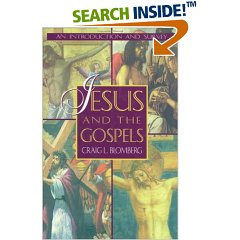
“Jesus and the Gospels: An Introduction and Survey” is a wonderful introductory book on Jesus and the four gospels (Matthew, Mark, Luke and John). The book is set-up like an introductory textbook, providing easy to read chapters, informative charts/graphs, and review questions at the end of each chapter. Another great feature of this book is that at the end of each chapter, Dr. Blomberg provides a list of books for further study and categorizes each of them as “Introductory”, “Intermediate” or “Advance”.
“Jesus and the Gospels: An Introduction and Survey” is divided into 5 major sections: (1) Historical Background for Studying the Gospels (2) Critical Methods for Studying the Gospels (3) Introduction to the Four Gospels (4) A Survey of the Life of Christ (5) Historical and Theological Syntheses. I found the fourth section to be very enriching, as Dr. Blomberg pieces all four of the Gospels in a seamless chronological order, something I tried to do a few years ago, but I quickly abandon the effort after being frustrated with the difficultly of the task.
I want to encourage anyone who desires to begin a serious study of Jesus or the Gospels to read this book, because I found it difficult to find a scholarly book on this topic from any conservative and evangelical authors, so finding this book was like finding rare treasure. Lastly, it was exciting and encouraging to read about Dr. Blomberg’s heart in writing this scholarly book:
“No matter what level of Gospel tradition one examines- the evangelist’s redaction, the developing oral tradition, or the bedrock core of what can securely be assigned to the historical Jesus – one impression remains the same. Jesus, like his earliest followers, was convinced that how one responded to him was the most important decision anyone could make in his or her life. On this response hinges one’s eternal destiny. We are called to become Christ’s followers, to be subject of the kingdom, to practice the “greater righteousness” that he demands but also makes possible for those who declare their allegiance to him….Simply admiring and imitating Jesus, however, is not adequate, unless it stems from our faith in his person as the unique God-man and our reception of the forgiveness of sins that he offers. If this book has enabled its readers to progress towards these goals, in the myriad of fascinating and controversial details that has it explored, then it will have proved worth the effort for both writer and readers.” – pg. 412
Thursday, February 23, 2006
THIS RITE EXHIBITS UNION WITH CHRIST by J. I. Packer
FPCers,
Here are thoughts on baptism by J.I. Packer:
THIS RITE EXHIBITS UNION WITH CHRIST by J. I. Packer
Or don’t you know that all of us who were baptized into Christ Jesus were baptized into his death? We were therefore buried with him through baptism into death in order that, just as Christ was raised from the dead through the glory of the Father, we too may live a new life. ROMANS 6:3-4
Christian baptism, which has the form of a ceremonial washing (like John’s pre-Christian baptism), is a sign from God that signifies inward cleansing and remission of sins (Acts 22:16; 1 Cor. 6:11; Eph. 5:25-27), Spirit-wrought regeneration and new life (Titus 3:5), and the abiding presence of the Holy Spirit as God’s seal testifying and guaranteeing that one will be kept safe in Christ forever (1 Cor. 12:13; Eph. 1:13-14). Baptism carries these meanings because first and fundamentally it signifies union with Christ in his death, burial, and resurrection (Rom. 6:3-7; Col. 2:11-12); and this union with Christ is the source of every element in our salvation (1 John 5:11-12). Receiving the sign in faith assures the persons baptized that God’s gift of new life in Christ is freely given to them. At the same time, it commits them to live henceforth in a new way as committed disciples of Jesus. Baptism signifies a watershed point in a human life because it signifies a new-creational engrafting into Christ’s risen life.
Christ instructed his disciples to baptize in the name of the Father, the Son, and the Holy Spirit (Matt. 28:19). This means that the covenant relation which baptism formally confers is one of acceptance by, communion with, and commitment to all three Persons of the Godhead. When Paul says that the Israelites were “baptized into Moses” (1 Cor. 10:2), he means that they were put under Moses’ control and direction. Thus, baptism into the name of the triune God signifies control and direction by God himself.
The outward sign does not automatically or magically convey the inward blessings that it signifies, and the candidates’ professions of faith are not always genuine. Peter had to tell the newly baptized Simon Magus that he was still unrenewed in heart (Acts 8:13-24).
As a sign of a once-for-all event, baptism should be administered to a person only once. Baptism is real and valid if water and the triune name are used, even if it is of an adult whose profession turns out to have been hypocritical. Simon Magus received baptism once, and if he came to real faith later it would have been incorrect to baptize him again.
No prescription of a particular mode of baptism can be found in the New Testament. The command to baptize may be fulfilled by immersion, dipping, or sprinkling; all three modes satisfy the meaning of the Greek verb baptizo and the symbolic requirement of passing under, and emerging from, cleansing water.
To baptize believers’ babies, in the belief that this accords with God’s revealed will, has been the historic practice of most churches. However, the worldwide baptist community, which includes distinguished Reformed thinkers, disputes it.
This links up with the baptist insistence that membership of local congregations is only for those who have publicly professed personal faith: an emphasis often buttressed by the claim that Christ instituted baptism primarily for a public profession of faith, and that such a profession is part of the definition of baptism, so that infant baptism is not really baptism at all. (Therefore baptist churches usually rebaptize as believers persons baptized in infancy who have come to faith; from the baptist standpoint they are still unbaptized.) Reformed theology negates the view that believer-baptism is the only baptism and rejects baptist denials of a place for believers’ children in the body of Christ by virtue of their parentage, and thus from birth. These differences about the visible church form the background for all discussions of infant baptism as such.
The case for baptizing believers’ infants (a practice that the New Testament neither illustrates nor prescribes nor forbids) rests on the claim that the transition from the “old” to the “new” form of God’s covenant that was brought about by the coming of Christ did not affect the principle of family solidarity in the covenant community (i.e., the church, as it is now called). Infants were therefore to be baptized, as Jewish male infants had previously been circumcised, not to confer on them covenant status, but to attest the covenant status that by God’s sovereign appointment their parentage had already given them.
In 1 Corinthians 7:14, Paul resolves the question of whether God accepts a marriage in which only one partner has become a Christian by invoking the certainty that the children of such a marriage are relationally and covenantally “holy,” that is, are dedicated to and accepted by God in company with their one Christian parent. So the principle of parent-and-child solidarity still stands, as Peter also indicated in his Pentecost sermon (Acts 2:39). But if infants share covenant status with their parent, it is fitting, other things being equal, to give them the sign of that status and of their place in the covenant community, and it would be unfitting for the church to withhold it. This fitness is demonstrated by the fact that when circumcision was the sign of covenant status and community inclusion, God commanded it explicitly (Gen. 17:9-14).
Against this, baptists affirm that (a) circumcision was primarily a sign of Jewish ethnic identity, so the parallel alleged between it and Christian baptism is a mistake; (b) under the new covenant, the requirement of personal faith before baptism is absolute; and (c) practices that Scripture does not explicitly recognize and approve must not be brought into church life.
Certainly, all adult church members should have professed faith personally before the church, and communities that baptize infants provide for this in a rite of confirmation or its equivalent. The Christian nurture of baptist and paedobaptist children will be similar: dedicated to God in infancy, either by baptism or by a dedication rite (which some will see as a dry baptism), they will then be brought up to live for the Lord and led to the point of publicly professing faith on their own account in confirmation or baptism (which some will see as a wet confirmation). After this they will enjoy full communicant status, unless indeed they come under discipline for some lapse. The ongoing debate is not about nurture but about God’s way of defining the church.
--------------------------------------------------------------------------------
From: Concise Theology: A Guide To Historic Christian Beliefs
Here are thoughts on baptism by J.I. Packer:
THIS RITE EXHIBITS UNION WITH CHRIST by J. I. Packer
Or don’t you know that all of us who were baptized into Christ Jesus were baptized into his death? We were therefore buried with him through baptism into death in order that, just as Christ was raised from the dead through the glory of the Father, we too may live a new life. ROMANS 6:3-4
Christian baptism, which has the form of a ceremonial washing (like John’s pre-Christian baptism), is a sign from God that signifies inward cleansing and remission of sins (Acts 22:16; 1 Cor. 6:11; Eph. 5:25-27), Spirit-wrought regeneration and new life (Titus 3:5), and the abiding presence of the Holy Spirit as God’s seal testifying and guaranteeing that one will be kept safe in Christ forever (1 Cor. 12:13; Eph. 1:13-14). Baptism carries these meanings because first and fundamentally it signifies union with Christ in his death, burial, and resurrection (Rom. 6:3-7; Col. 2:11-12); and this union with Christ is the source of every element in our salvation (1 John 5:11-12). Receiving the sign in faith assures the persons baptized that God’s gift of new life in Christ is freely given to them. At the same time, it commits them to live henceforth in a new way as committed disciples of Jesus. Baptism signifies a watershed point in a human life because it signifies a new-creational engrafting into Christ’s risen life.
Christ instructed his disciples to baptize in the name of the Father, the Son, and the Holy Spirit (Matt. 28:19). This means that the covenant relation which baptism formally confers is one of acceptance by, communion with, and commitment to all three Persons of the Godhead. When Paul says that the Israelites were “baptized into Moses” (1 Cor. 10:2), he means that they were put under Moses’ control and direction. Thus, baptism into the name of the triune God signifies control and direction by God himself.
The outward sign does not automatically or magically convey the inward blessings that it signifies, and the candidates’ professions of faith are not always genuine. Peter had to tell the newly baptized Simon Magus that he was still unrenewed in heart (Acts 8:13-24).
As a sign of a once-for-all event, baptism should be administered to a person only once. Baptism is real and valid if water and the triune name are used, even if it is of an adult whose profession turns out to have been hypocritical. Simon Magus received baptism once, and if he came to real faith later it would have been incorrect to baptize him again.
No prescription of a particular mode of baptism can be found in the New Testament. The command to baptize may be fulfilled by immersion, dipping, or sprinkling; all three modes satisfy the meaning of the Greek verb baptizo and the symbolic requirement of passing under, and emerging from, cleansing water.
To baptize believers’ babies, in the belief that this accords with God’s revealed will, has been the historic practice of most churches. However, the worldwide baptist community, which includes distinguished Reformed thinkers, disputes it.
This links up with the baptist insistence that membership of local congregations is only for those who have publicly professed personal faith: an emphasis often buttressed by the claim that Christ instituted baptism primarily for a public profession of faith, and that such a profession is part of the definition of baptism, so that infant baptism is not really baptism at all. (Therefore baptist churches usually rebaptize as believers persons baptized in infancy who have come to faith; from the baptist standpoint they are still unbaptized.) Reformed theology negates the view that believer-baptism is the only baptism and rejects baptist denials of a place for believers’ children in the body of Christ by virtue of their parentage, and thus from birth. These differences about the visible church form the background for all discussions of infant baptism as such.
The case for baptizing believers’ infants (a practice that the New Testament neither illustrates nor prescribes nor forbids) rests on the claim that the transition from the “old” to the “new” form of God’s covenant that was brought about by the coming of Christ did not affect the principle of family solidarity in the covenant community (i.e., the church, as it is now called). Infants were therefore to be baptized, as Jewish male infants had previously been circumcised, not to confer on them covenant status, but to attest the covenant status that by God’s sovereign appointment their parentage had already given them.
In 1 Corinthians 7:14, Paul resolves the question of whether God accepts a marriage in which only one partner has become a Christian by invoking the certainty that the children of such a marriage are relationally and covenantally “holy,” that is, are dedicated to and accepted by God in company with their one Christian parent. So the principle of parent-and-child solidarity still stands, as Peter also indicated in his Pentecost sermon (Acts 2:39). But if infants share covenant status with their parent, it is fitting, other things being equal, to give them the sign of that status and of their place in the covenant community, and it would be unfitting for the church to withhold it. This fitness is demonstrated by the fact that when circumcision was the sign of covenant status and community inclusion, God commanded it explicitly (Gen. 17:9-14).
Against this, baptists affirm that (a) circumcision was primarily a sign of Jewish ethnic identity, so the parallel alleged between it and Christian baptism is a mistake; (b) under the new covenant, the requirement of personal faith before baptism is absolute; and (c) practices that Scripture does not explicitly recognize and approve must not be brought into church life.
Certainly, all adult church members should have professed faith personally before the church, and communities that baptize infants provide for this in a rite of confirmation or its equivalent. The Christian nurture of baptist and paedobaptist children will be similar: dedicated to God in infancy, either by baptism or by a dedication rite (which some will see as a dry baptism), they will then be brought up to live for the Lord and led to the point of publicly professing faith on their own account in confirmation or baptism (which some will see as a wet confirmation). After this they will enjoy full communicant status, unless indeed they come under discipline for some lapse. The ongoing debate is not about nurture but about God’s way of defining the church.
--------------------------------------------------------------------------------
From: Concise Theology: A Guide To Historic Christian Beliefs
Pastor John's Confirmation/Confessional Classes
Peoples,
Please respond and let Pastor John know, if you will be attending his confirmation/confessional classes for March. I think these classes can potentially be a sweet time in studying together the basic tenets of our faith and to understand why these truths are important. (I know I need it, as a recent survey states that I am Nestorian*, but there are many other reasons why I need these classes). I can't stress enough the importance of trying to know who God truly is, as revealed from the Bible. This process of understanding our God is a lifetime process, which have massive effects (even though sometimes we don't notice them) on how we do missions, evangelism, worship, prayer, our job, and etc (basically everything), and this process is not just for getting some survey "right", as I alluded earlier, even though I don't like being called a "Nestorian":)
Also this class should be a sweet time just to be together as a church (career, youth, adults, and Mike) because we don't normally study the word together as a whole group. So I hope everyone will try to come to these classes (the schedule is below).
*relating to an Asian Christian denomination that believes that two distinct persons, one divine and the other human, existed in Jesus Christ. This doctrine was declared heresy in ad 431. (It's funny that it's an Asian Christian Group)
dan
2006 FPC Lenten Youth Confirmation Class Info/Schedule: What: learning the basics of Christian faith and Presbyterian church membership. When: mostly Friday night youth activities during Lent Where: mostly at FPC (see schedule below)
Who and Why?: all welcome; students attending these classes, participating in reflection activities and expressing a desire to affirm their faith in Christ will have opportunity to be baptized and/or join FPC on Easter Sun, April 16, 2006.
Fri Mar 3: I—Creeds Intro: the Chief End of Man, Scripture
Fri Mar 10 or Wed Mar 8?: II—What We Believe About God: Father, Son, Holy Spirit
Fri Mar 17: III—What Duty God Requires of Us: 10 Commandments; Apostle’s Creed, Lord’s Prayer
Fri Mar 24: IV—Duty continued; Presbyterian identity
Fri Mar 31: V—Gospel in Action: Service Project/Testimonies
Thu Apr 6 or Sun Apr 9: VI—Examination by Session
Please respond and let Pastor John know, if you will be attending his confirmation/confessional classes for March. I think these classes can potentially be a sweet time in studying together the basic tenets of our faith and to understand why these truths are important. (I know I need it, as a recent survey states that I am Nestorian*, but there are many other reasons why I need these classes). I can't stress enough the importance of trying to know who God truly is, as revealed from the Bible. This process of understanding our God is a lifetime process, which have massive effects (even though sometimes we don't notice them) on how we do missions, evangelism, worship, prayer, our job, and etc (basically everything), and this process is not just for getting some survey "right", as I alluded earlier, even though I don't like being called a "Nestorian":)
Also this class should be a sweet time just to be together as a church (career, youth, adults, and Mike) because we don't normally study the word together as a whole group. So I hope everyone will try to come to these classes (the schedule is below).
*relating to an Asian Christian denomination that believes that two distinct persons, one divine and the other human, existed in Jesus Christ. This doctrine was declared heresy in ad 431. (It's funny that it's an Asian Christian Group)
dan
2006 FPC Lenten Youth Confirmation Class Info/Schedule: What: learning the basics of Christian faith and Presbyterian church membership. When: mostly Friday night youth activities during Lent Where: mostly at FPC (see schedule below)
Who and Why?: all welcome; students attending these classes, participating in reflection activities and expressing a desire to affirm their faith in Christ will have opportunity to be baptized and/or join FPC on Easter Sun, April 16, 2006.
Fri Mar 3: I—Creeds Intro: the Chief End of Man, Scripture
Fri Mar 10 or Wed Mar 8?: II—What We Believe About God: Father, Son, Holy Spirit
Fri Mar 17: III—What Duty God Requires of Us: 10 Commandments; Apostle’s Creed, Lord’s Prayer
Fri Mar 24: IV—Duty continued; Presbyterian identity
Fri Mar 31: V—Gospel in Action: Service Project/Testimonies
Thu Apr 6 or Sun Apr 9: VI—Examination by Session
Monday, February 20, 2006
The Balance of Doctrine and Social Engagement
In the last century, there always seems to be a tension between doctrinal commitment (right thinking) and social engagement (right living). In the early 20th century, there was the battle between fundamentalism (more doctrine concerned) and liberalism/modernism (more societal concerned), and then in the mid 20th century, there was the separation of the fundamentalist and evangelicals/neo-evangelicals, who were concerned about the fundamentalist’s separatism from social engagement (1). And more recently, there’s the Emerging Church Movement, in which, their passion and zeal for missions and outreach appears to have left doctrinal (propositional) truth behind (2).
In light of these historical patterns, I believe this is a reminder for FPC to seek a balance in our church. We need and should have a lifestyle that always seeks to understand truth (propositional) about God and all of his revelations in the Bible, because if we don’t, at the most basic-level we won’t have a message or a gospel to bring to people (1 John 5:12). But we shouldn’t just stop there, we also need to have a lifestyle that engages our society/community with love and compassion through the gospel message, especially to other Christians and the poor, because if we don’t, we will fail to be the type of Christians that God intended for us to be (1 John 3:16-18).
Recently, I have been excited about our current sermon study of the gospel of Mark and our pastoral version of “Preparing to Sharing”, because I think both these things carrying out the balance of doctrine (preparing) and societal engagement (sharing). Obviously, there’s still a lot of work in order to create a church lifestyle of doctrinal commitment and social engagement, but I am encouraged to see FPC moving in the right direction.
Lastly, I want to encourage all FPC members to attend Pastor John’s or Pastor Kho’s confessional classes held in March, regardless if you have been confirmed or not, so that we can continue to grow together in Christ through biblical truths, thus increasing our joy in Christ and increasing our knowledge of the gospel message, for which we are commanded to bring to the world. Also, if you have a desire to each the poor or to our existing and surrounding community through the gospel and would like to share your thoughts on exactly how to do so, please talk to Pastor John or Mike because they would love to hear your thoughts.
Dan
(1) From http://www.theopedia.com/Liberalism
http://www.covchurch.org/cov/companion/article/0602FutureorFad.pdf
Sunday, February 19, 2006
If Theologians were Basketball Players…

Dr. (Mark) Dever would be Lebron James. The reason Dr. Dever would be Lebron is that they are both fun and humorous (just listen to any of Mark’s interviews and watch Lebron’s latest commercials), but when it’s “game time” they become extremely serious about their profession.
Over the years, I have grown to truly admire Dr. Dever for his passion to help churches mature and grow through biblical methods rather than “program-oriented” or through pragmatism.
So future FPC leaders, please look for guidance from Dr. Dever for help in your future ministries.
Resources:
- 9 Marks Ministries – one stop shop on how to minister through biblical means.
- “9 Marks of Healthy Church” – this book should be read by all church leaders on how to build a healthy church.
- “The
4. Capital Hill Baptist – this is Dr. Dever’s church. On the website you can find sermons and articles that are helpful. Also, if you need help with Sunday School material, there’s a Core Seminar selection that is priceless.
http://www.capitolhillbaptist.org/
Saturday, February 18, 2006



Thursday, February 16, 2006
Why Read Good Theology Books
First of all, if I had to choose reading my Bible or reading good theology books, I would choose to read my Bible and burn all of my books (but I don't think most of us have to make that choice) . Also, I don't think most people should read a lot of books, but they should master and know a few good books well. Please hear the advice of Martin Luther, the great reformer:
"A student who does not want his labor wasted must so read and reread some good writer that the author is changed, as it were, into his flesh and blood. For a great variety of reading confuses and does not teach. It makes the student like a man who dwells everywhere and, therefore, nowhere in particular. Just as we do not daily enjoy the society of every one of our friends but only that of a chosen few, so it should also be in our studying. The number of theological books should ... be reduced, and a selection should be made of the best of them; for many books do not make men learned, nor does much reading. But reading something good, and reading it frequently, however little it may be, is the practice that makes men learned in the Scripture and makes them pious besides." (thanks for the quote Geoff)
Well 4 years ago, 98% of all my reading consist of accounting books, sports magazines and newspapers. But then I met John Piper (see my debt to Piper at http://fpcinhouston.org/forum/viewtopic.php?t=193), who challenged me (and still does) in all the areas of my life. And one of Piper's challenges, is that if I wanted to make an impact or a difference in my life and others, I needed to know my Bible better, and one of the ways to do so was to read good books.
So why should you know your Bible Better? (just a few)
1. Knowing my Bible better allows me to know better the beauty and glory of the one and only living God and his son, Jesus Christ.
2. Seeing the glory of God through Christ (which we see in the Bible) produces sanctification, that is it produces holiness.
3. The Bible teaches how to love God and people by giving me principles.
4. The Bible teaches me the methods and priorities of the church, and defines the church
So why read "good" books?
Basically, I read good because most of the times I just don't understand the Bible and I need help from the universal church, both past and present, to teach me.
An Example
I just finished reading Dr. Moore's book "The Kingdom of Christ" and it taught and reminded me that "salvation" or "redemption" is broader than just individual forgiveness of sins and people going to this spiritual realm called "heaven", but "salvation/redemption" has a community aspect to it, and it's larger than just forgiveness of sins, that is, it consist of being progressively "saved" from sin through the Spirit (sanctification) and it involves the "redeeming" of a physical world, (not through violence,but sacrificial love of the church), in which the completion of "salvation/redemption" of both people, church, and the physical world happen when Christ comes back in his second coming to consummate his kingdom.
Therefore I believe if the church had a larger biblically vision of "salvation/redemption", we would act differently, that is we would have more concern for the physical realm, the community, the day to day fight of sin (sanctification), and etc....that's why I read good books.
"A student who does not want his labor wasted must so read and reread some good writer that the author is changed, as it were, into his flesh and blood. For a great variety of reading confuses and does not teach. It makes the student like a man who dwells everywhere and, therefore, nowhere in particular. Just as we do not daily enjoy the society of every one of our friends but only that of a chosen few, so it should also be in our studying. The number of theological books should ... be reduced, and a selection should be made of the best of them; for many books do not make men learned, nor does much reading. But reading something good, and reading it frequently, however little it may be, is the practice that makes men learned in the Scripture and makes them pious besides." (thanks for the quote Geoff)
Well 4 years ago, 98% of all my reading consist of accounting books, sports magazines and newspapers. But then I met John Piper (see my debt to Piper at http://fpcinhouston.org/forum/viewtopic.php?t=193), who challenged me (and still does) in all the areas of my life. And one of Piper's challenges, is that if I wanted to make an impact or a difference in my life and others, I needed to know my Bible better, and one of the ways to do so was to read good books.
So why should you know your Bible Better? (just a few)
1. Knowing my Bible better allows me to know better the beauty and glory of the one and only living God and his son, Jesus Christ.
2. Seeing the glory of God through Christ (which we see in the Bible) produces sanctification, that is it produces holiness.
3. The Bible teaches how to love God and people by giving me principles.
4. The Bible teaches me the methods and priorities of the church, and defines the church
So why read "good" books?
Basically, I read good because most of the times I just don't understand the Bible and I need help from the universal church, both past and present, to teach me.
An Example
I just finished reading Dr. Moore's book "The Kingdom of Christ" and it taught and reminded me that "salvation" or "redemption" is broader than just individual forgiveness of sins and people going to this spiritual realm called "heaven", but "salvation/redemption" has a community aspect to it, and it's larger than just forgiveness of sins, that is, it consist of being progressively "saved" from sin through the Spirit (sanctification) and it involves the "redeeming" of a physical world, (not through violence,but sacrificial love of the church), in which the completion of "salvation/redemption" of both people, church, and the physical world happen when Christ comes back in his second coming to consummate his kingdom.
Therefore I believe if the church had a larger biblically vision of "salvation/redemption", we would act differently, that is we would have more concern for the physical realm, the community, the day to day fight of sin (sanctification), and etc....that's why I read good books.
Wednesday, February 15, 2006
Don’t Waste Your Cancer
Don’t Waste Your Cancer
by John Piper
February 15, 2006
I write this on the eve of prostate surgery. I believe in God’s power to heal—by miracle and by medicine. I believe it is right and good to pray for both kinds of healing. Cancer is not wasted when it is healed by God. He gets the glory and that is why cancer exists. So not to pray for healing may waste your cancer. But healing is not God’s plan for everyone. And there are many other ways to waste your cancer. I am praying for myself and for you that we will not waste this pain.
1. You will waste your cancer if you do not believe it is designed for you by God.
It will not do to say that God only uses our cancer but does not design it. What God permits, he permits for a reason. And that reason is his design. If God foresees molecular developments becoming cancer, he can stop it or not. If he does not, he has a purpose. Since he is infinitely wise, it is right to call this purpose a design. Satan is real and causes many pleasures and pains. But he is not ultimate. So when he strikes Job with boils (Job 2:7), Job attributes it ultimately to God (2:10) and the inspired writer agrees: “They . . . comforted him for all the evil that the Lord had brought upon him” (Job 42:11). If you don’t believe your cancer is designed for you by God, you will waste it.
2. You will waste your cancer if you believe it is a curse and not a gift.
“There is therefore now no condemnation for those who are in Christ Jesus” (Romans 8:1). “Christ redeemed us from the curse of the law by becoming a curse for us” (Galatians 3:13). “There is no enchantment against Jacob, no divination against Israel” (Numbers 23:23). “The Lord God is a sun and shield; the Lord bestows favor and honor. No good thing does he withhold from those who walk uprightly” (Psalm 84:11).
3. You will waste your cancer if you seek comfort from your odds rather than from God.
The design of God in your cancer is not to train you in the rationalistic, human calculation of odds. The world gets comfort from their odds. Not Christians. Some count their chariots (percentages of survival) and some count their horses (side effects of treatment), but we trust in the name of the Lord our God (Psalm 20:7). God’s design is clear from 2 Corinthians 1:9, “We felt that we had received the sentence of death. But that was to make us rely not on ourselves but on God who raises the dead.” The aim of God in your cancer (among a thousand other good things) is to knock props out from under our hearts so that we rely utterly on him.
4. You will waste your cancer if you refuse to think about death.
We will all die, if Jesus postpones his return. Not to think about what it will be like to leave this life and meet God is folly. Ecclesiastes 7:2 says, “It is better to go to the house of mourning [a funeral] than to go to the house of feasting, for this is the end of all mankind, and the living will lay it to heart.” How can you lay it to heart if you won’t think about it? Psalm 90:12 says, “Teach us to number our days that we may get a heart of wisdom.” Numbering your days means thinking about how few there are and that they will end. How will you get a heart of wisdom if you refuse to think about this? What a waste, if we do not think about death.
5. You will waste your cancer if you think that “beating” cancer means staying alive rather than cherishing Christ.
Satan’s and God’s designs in your cancer are not the same. Satan designs to destroy your love for Christ. God designs to deepen your love for Christ. Cancer does not win if you die. It wins if you fail to cherish Christ. God’s design is to wean you off the breast of the world and feast you on the sufficiency of Christ. It is meant to help you say and feel, “I count everything as loss because of the surpassing worth of knowing Christ Jesus my Lord.” And to know that therefore, “To live is Christ, and to die is gain” (Philippians 3:8; 1:21).
6. You will waste your cancer if you spend too much time reading about cancer and not enough time reading about God.
It is not wrong to know about cancer. Ignorance is not a virtue. But the lure to know more and more and the lack of zeal to know God more and more is symptomatic of unbelief. Cancer is meant to waken us to the reality of God. It is meant to put feeling and force behind the command, “Let us know; let us press on to know the Lord” (Hosea 6:3). It is meant to waken us to the truth of Daniel 11:32, “The people who know their God shall stand firm and take action.” It is meant to make unshakable, indestructible oak trees out of us: “His delight is in the law of the Lord, and on his law he meditates day and night. He is like a tree planted by streams of water that yields its fruit in its season, and its leaf does not wither. In all that he does, he prospers” (Psalm 1:2). What a waste of cancer if we read day and night about cancer and not about God.
7. You will waste your cancer if you let it drive you into solitude instead of deepen your relationships with manifest affection.
When Epaphroditus brought the gifts to Paul sent by the Philippian church he became ill and almost died. Paul tells the Philippians, “He has been longing for you all and has been distressed because you heard that he was ill” (Philippians 2:26-27). What an amazing response! It does not say they were distressed that he was ill, but that he was distressed because they heard he was ill. That is the kind of heart God is aiming to create with cancer: a deeply affectionate, caring heart for people. Don’t waste your cancer by retreating into yourself.
8. You will waste your cancer if you grieve as those who have no hope.
Paul used this phrase in relation to those whose loved ones had died: “We do not want you to be uninformed, brothers, about those who are asleep, that you may not grieve as others do who have no hope” (1 Thessalonians 4:13). There is a grief at death. Even for the believer who dies, there is temporary loss—loss of body, and loss of loved ones here, and loss of earthly ministry. But the grief is different—it is permeated with hope. “We would rather be away from the body and at home with the Lord” (2 Corinthians 5:8). Don’t waste your cancer grieving as those who don’t have this hope.
9. You will waste your cancer if you treat sin as casually as before.
Are your besetting sins as attractive as they were before you had cancer? If so you are wasting your cancer. Cancer is designed to destroy the appetite for sin. Pride, greed, lust, hatred, unforgiveness, impatience, laziness, procrastination—all these are the adversaries that cancer is meant to attack. Don’t just think of battling against cancer. Also think of battling with cancer. All these things are worse enemies than cancer. Don’t waste the power of cancer to crush these foes. Let the presence of eternity make the sins of time look as futile as they really are. “What does it profit a man if he gains the whole world and loses or forfeits himself?” (Luke 9:25).
10. You will waste your cancer if you fail to use it as a means of witness to the truth and glory of Christ.
Christians are never anywhere by divine accident. There are reasons for why we wind up where we do. Consider what Jesus said about painful, unplanned circumstances: “They will lay their hands on you and persecute you, delivering you up to the synagogues and prisons, and you will be brought before kings and governors for my name’s sake. This will be your opportunity to bear witness” (Luke 21:12 -13). So it is with cancer. This will be an opportunity to bear witness. Christ is infinitely worthy. Here is a golden opportunity to show that he is worth more than life. Don’t waste it.
Remember you are not left alone. You will have the help you need. “My God will supply every need of yours according to his riches in glory in Christ Jesus” (Philippians 4:19).
Pastor John
* you can find the article here:
http://desiringgod.org/library/fresh_words/2006/021506.html
by John Piper
February 15, 2006
I write this on the eve of prostate surgery. I believe in God’s power to heal—by miracle and by medicine. I believe it is right and good to pray for both kinds of healing. Cancer is not wasted when it is healed by God. He gets the glory and that is why cancer exists. So not to pray for healing may waste your cancer. But healing is not God’s plan for everyone. And there are many other ways to waste your cancer. I am praying for myself and for you that we will not waste this pain.
1. You will waste your cancer if you do not believe it is designed for you by God.
It will not do to say that God only uses our cancer but does not design it. What God permits, he permits for a reason. And that reason is his design. If God foresees molecular developments becoming cancer, he can stop it or not. If he does not, he has a purpose. Since he is infinitely wise, it is right to call this purpose a design. Satan is real and causes many pleasures and pains. But he is not ultimate. So when he strikes Job with boils (Job 2:7), Job attributes it ultimately to God (2:10) and the inspired writer agrees: “They . . . comforted him for all the evil that the Lord had brought upon him” (Job 42:11). If you don’t believe your cancer is designed for you by God, you will waste it.
2. You will waste your cancer if you believe it is a curse and not a gift.
“There is therefore now no condemnation for those who are in Christ Jesus” (Romans 8:1). “Christ redeemed us from the curse of the law by becoming a curse for us” (Galatians 3:13). “There is no enchantment against Jacob, no divination against Israel” (Numbers 23:23). “The Lord God is a sun and shield; the Lord bestows favor and honor. No good thing does he withhold from those who walk uprightly” (Psalm 84:11).
3. You will waste your cancer if you seek comfort from your odds rather than from God.
The design of God in your cancer is not to train you in the rationalistic, human calculation of odds. The world gets comfort from their odds. Not Christians. Some count their chariots (percentages of survival) and some count their horses (side effects of treatment), but we trust in the name of the Lord our God (Psalm 20:7). God’s design is clear from 2 Corinthians 1:9, “We felt that we had received the sentence of death. But that was to make us rely not on ourselves but on God who raises the dead.” The aim of God in your cancer (among a thousand other good things) is to knock props out from under our hearts so that we rely utterly on him.
4. You will waste your cancer if you refuse to think about death.
We will all die, if Jesus postpones his return. Not to think about what it will be like to leave this life and meet God is folly. Ecclesiastes 7:2 says, “It is better to go to the house of mourning [a funeral] than to go to the house of feasting, for this is the end of all mankind, and the living will lay it to heart.” How can you lay it to heart if you won’t think about it? Psalm 90:12 says, “Teach us to number our days that we may get a heart of wisdom.” Numbering your days means thinking about how few there are and that they will end. How will you get a heart of wisdom if you refuse to think about this? What a waste, if we do not think about death.
5. You will waste your cancer if you think that “beating” cancer means staying alive rather than cherishing Christ.
Satan’s and God’s designs in your cancer are not the same. Satan designs to destroy your love for Christ. God designs to deepen your love for Christ. Cancer does not win if you die. It wins if you fail to cherish Christ. God’s design is to wean you off the breast of the world and feast you on the sufficiency of Christ. It is meant to help you say and feel, “I count everything as loss because of the surpassing worth of knowing Christ Jesus my Lord.” And to know that therefore, “To live is Christ, and to die is gain” (Philippians 3:8; 1:21).
6. You will waste your cancer if you spend too much time reading about cancer and not enough time reading about God.
It is not wrong to know about cancer. Ignorance is not a virtue. But the lure to know more and more and the lack of zeal to know God more and more is symptomatic of unbelief. Cancer is meant to waken us to the reality of God. It is meant to put feeling and force behind the command, “Let us know; let us press on to know the Lord” (Hosea 6:3). It is meant to waken us to the truth of Daniel 11:32, “The people who know their God shall stand firm and take action.” It is meant to make unshakable, indestructible oak trees out of us: “His delight is in the law of the Lord, and on his law he meditates day and night. He is like a tree planted by streams of water that yields its fruit in its season, and its leaf does not wither. In all that he does, he prospers” (Psalm 1:2). What a waste of cancer if we read day and night about cancer and not about God.
7. You will waste your cancer if you let it drive you into solitude instead of deepen your relationships with manifest affection.
When Epaphroditus brought the gifts to Paul sent by the Philippian church he became ill and almost died. Paul tells the Philippians, “He has been longing for you all and has been distressed because you heard that he was ill” (Philippians 2:26-27). What an amazing response! It does not say they were distressed that he was ill, but that he was distressed because they heard he was ill. That is the kind of heart God is aiming to create with cancer: a deeply affectionate, caring heart for people. Don’t waste your cancer by retreating into yourself.
8. You will waste your cancer if you grieve as those who have no hope.
Paul used this phrase in relation to those whose loved ones had died: “We do not want you to be uninformed, brothers, about those who are asleep, that you may not grieve as others do who have no hope” (1 Thessalonians 4:13). There is a grief at death. Even for the believer who dies, there is temporary loss—loss of body, and loss of loved ones here, and loss of earthly ministry. But the grief is different—it is permeated with hope. “We would rather be away from the body and at home with the Lord” (2 Corinthians 5:8). Don’t waste your cancer grieving as those who don’t have this hope.
9. You will waste your cancer if you treat sin as casually as before.
Are your besetting sins as attractive as they were before you had cancer? If so you are wasting your cancer. Cancer is designed to destroy the appetite for sin. Pride, greed, lust, hatred, unforgiveness, impatience, laziness, procrastination—all these are the adversaries that cancer is meant to attack. Don’t just think of battling against cancer. Also think of battling with cancer. All these things are worse enemies than cancer. Don’t waste the power of cancer to crush these foes. Let the presence of eternity make the sins of time look as futile as they really are. “What does it profit a man if he gains the whole world and loses or forfeits himself?” (Luke 9:25).
10. You will waste your cancer if you fail to use it as a means of witness to the truth and glory of Christ.
Christians are never anywhere by divine accident. There are reasons for why we wind up where we do. Consider what Jesus said about painful, unplanned circumstances: “They will lay their hands on you and persecute you, delivering you up to the synagogues and prisons, and you will be brought before kings and governors for my name’s sake. This will be your opportunity to bear witness” (Luke 21:12 -13). So it is with cancer. This will be an opportunity to bear witness. Christ is infinitely worthy. Here is a golden opportunity to show that he is worth more than life. Don’t waste it.
Remember you are not left alone. You will have the help you need. “My God will supply every need of yours according to his riches in glory in Christ Jesus” (Philippians 4:19).
Pastor John
* you can find the article here:
http://desiringgod.org/library/fresh_words/2006/021506.html
Tuesday, February 14, 2006
"If the Church Would Be The Church"
42And they devoted themselves to the apostles' teaching and fellowship, to the breaking of bread and the prayers. 43And awe came upon every soul, and many wonders and signs were being done through the apostles. 44And all who believed were together and had all things in common. 45And they were selling their possessions and belongings and distributing the proceeds to all, as any had need. 46And day by day, attending the temple together and breaking bread in their homes, they received their food with glad and generous hearts, 47praising God and having favor with all the people. And the Lord added to their number day by day those who were being saved - Acts 2:42-47
Last weekend, I listened to my favorite Presbyterian preacher (Dr. Sinclair Ferguson) preach on the Acts 2:42-47, entitled "The Church's Birth Marks"*.
Towards the end of Dr. Ferguson's sermon he basically states that people would be more attracted to the church, "if the church would be the church", that is if the church would focus and rely on what God intended it to be instead of relying on gimmicks, misappropriated contextualization of biblical truth,and programs, for evangelism than the right growth may come about (v.47). Dr. Ferguson states that God intended the church to be 1) devoted to the apostles' teaching (THE BIBLE) (v.42), 2) devoted to having deep fellowship with one another (v.44 and v.46), which results in radical sacrificial love (v.45-46), and 3) devoted in having all these activities centered around the worship of God (v.47), then people would be attracted to the church.
I am encouraged, especially with the young FPCers, that they are being the church, that is they take serious the study of the Word of God and having deep fellowship with each other, while worshipping the living God.
* You can find the entire sermon here:
http://www.firstprescolumbia.org/Media/Audio/audio.asp
Last weekend, I listened to my favorite Presbyterian preacher (Dr. Sinclair Ferguson) preach on the Acts 2:42-47, entitled "The Church's Birth Marks"*.
Towards the end of Dr. Ferguson's sermon he basically states that people would be more attracted to the church, "if the church would be the church", that is if the church would focus and rely on what God intended it to be instead of relying on gimmicks, misappropriated contextualization of biblical truth,and programs, for evangelism than the right growth may come about (v.47). Dr. Ferguson states that God intended the church to be 1) devoted to the apostles' teaching (THE BIBLE) (v.42), 2) devoted to having deep fellowship with one another (v.44 and v.46), which results in radical sacrificial love (v.45-46), and 3) devoted in having all these activities centered around the worship of God (v.47), then people would be attracted to the church.
I am encouraged, especially with the young FPCers, that they are being the church, that is they take serious the study of the Word of God and having deep fellowship with each other, while worshipping the living God.
* You can find the entire sermon here:
http://www.firstprescolumbia.org/Media/Audio/audio.asp
Monday, February 13, 2006
Who Needs A Stinking Church?
Al Mohler has written a book review on George Barna's book "Revolution" (I haven't read the book), in which Barna tries to say that for a Christian a local church is unnecessary and is sometimes unhelpful.
Al Mohler quotes Barna:
"Being in a right relationship with God and His people is what matters. Scripture teaches us that devoting your life to loving God with all your heart, mind, strength, and soul is what honors Him. Being part of a local church may facilitate that. Or it might not."
Al Mohler states that Barna misses the point of the biblical view of the church and how it relates to Christians:
"What George Barna misses is the big picture of New Testament ecclesiology--a picture that identifies congregational life as the very means whereby believers are shaped into Christlikeness and Christian maturity through the ministry of the Word, the fellowship of the saints, and the normative patterns of church life. Barna's Revolutionaries may be involved on spiritual quests that have added dimensions of meaning to their lives, but what they lack is the accountability, deployment, mutuality, and koinonia of the local church as envisioned in the New Testament."
FPCers don't ever think you can generally be a Christian without a local church. A Christian generally isn't a "lone ranger". but is connected to a community of believers (a local church, with elders and leadership)
You can read the entire article here:
http://www.crosswalk.com/news/weblogs/mohler
Al Mohler quotes Barna:
"Being in a right relationship with God and His people is what matters. Scripture teaches us that devoting your life to loving God with all your heart, mind, strength, and soul is what honors Him. Being part of a local church may facilitate that. Or it might not."
Al Mohler states that Barna misses the point of the biblical view of the church and how it relates to Christians:
"What George Barna misses is the big picture of New Testament ecclesiology--a picture that identifies congregational life as the very means whereby believers are shaped into Christlikeness and Christian maturity through the ministry of the Word, the fellowship of the saints, and the normative patterns of church life. Barna's Revolutionaries may be involved on spiritual quests that have added dimensions of meaning to their lives, but what they lack is the accountability, deployment, mutuality, and koinonia of the local church as envisioned in the New Testament."
FPCers don't ever think you can generally be a Christian without a local church. A Christian generally isn't a "lone ranger". but is connected to a community of believers (a local church, with elders and leadership)
You can read the entire article here:
http://www.crosswalk.com/news/weblogs/mohler
Friday, February 10, 2006
CNN, Ken Barbie, and Danny

This story reminds me of my friend Danny. I don't know why.
http://www.cnn.com/2006/US/02/09/ken.barbie.reut/index.html
Thursday, February 09, 2006
The Kingdom Of Christ: The New Evangelical Perspective by Russell Moore
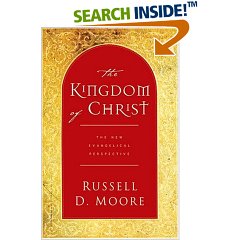
To be honest, when I purchased this book I wasn't expecting to learn much from it, but as I began to read through it I started to learn many new things.
First, Dr. Moore does a wonderful job of historical analysis on the 2 major evangelical camps ((dispensational and covenant theology) views of "The Kingdom of God" and how it relates to salvation (chapter 3) and the church (chapter 4), and how the two groups have gradually come up with a consensus that the kingdom is "the already, but not yet", that is the church is the inaugration of God's kingdom and Christ reigns now as king (the already), but God's kingdom has not been consummated (that is the full reign)until Christ's come back to establish the new heavens and new earth.
Dr. Moore also address how this new evangelical kingdom theology of the "the already, but not yet", will combat the "fundamentalist" camp withdrawal in the social and political arena, and the "social gospel" camp of pursuing social/political change without key Christian and biblical fundamentals (I.e. deny of individual redemption).
My only reservation of this book, is that the person choosing to read this book should have some knowledge of what dispensational and covenant theology are, otherwise one could be easily lost in Dr. Moore's detailed analysis (over 300-plus footnotes for each of the first 4 chapters). But I do recommend this book for all church leaders and teachers, I think this book will help lead the way of understanding that "The Kingdom of Christ" is broader and more glorious and the challenges of the church are deeper and more complex than once expected.
For more resources in engaging the social and political arena:
1. See Henry Institure
http://www.henryinstitute.org/
2. See Al Mohler
http://www.albertmohler.com/blog.php
3. For a quick understanding of "the already, but not yet" Kingdom Theology read, Dr (Edmund) Clowney's article, "The Politics of the Kingdome"
http://www.marshillaudio.org/resources/pdf/Clowney_Politics.pdf
Wednesday, February 08, 2006
Piper Article

For those that haven't been keeping up with the news, recently there has been some violent riots in protest of Danish cartoons of Muhammad, an Islamic prophet. See. http://www.cnn.com/2006/WORLD/asiapcf/02/08/cartoon.protests/index.html
John Piper has written a thoughtful and powerful article, articulating the difference between Christ and Muhammad.
Being Mocked: The Essence of Christ’s Work, not Muhammad’s
February 8, 2006
What we saw this past week in the Islamic demonstrations over the Danish cartoons of Muhammad was another vivid depiction of the difference between Muhammad and Christ, and what it means to follow each. Not all Muslims approve the violence. But a deep lesson remains: The work of Muhammad is based on being honored and the work of Christ is based on being insulted. This produces two very different reactions to mockery.
If Christ had not been insulted, there would be no salvation. This was his saving work: to be insulted and die to rescue sinners from the wrath of God. Already in the Psalms the path of mockery was promised: “All who see me mock me; they make mouths at me; they wag their heads” (Psalm 22:7). “He was despised and rejected by men . . . as one from whom men hide their faces . . . and we esteemed him not” (Isaiah 53:3).
When it actually happened it was worse than expected. “They stripped him and put a scarlet robe on him, and twisting together a crown of thorns, they put it on his head. . . . And kneeling before him, they mocked him, saying, ‘Hail, King of the Jews!’ And they spit on him” (Matthew 27:28-30). His response to all this was patient endurance. This was the work he came to do. “Like a lamb that is led to the slaughter, and like a sheep that before its shearers is silent, so he opened not his mouth” (Isaiah 53:7).
This was not true of Muhammad. And Muslims do not believe it is true of Jesus. Most Muslims have been taught that Jesus was not crucified. One Sunni Muslim writes, “Muslims believe that Allah saved the Messiah from the ignominy of crucifixion.”1 Another adds, “We honor [Jesus] more than you [Christians] do. . . . We refuse to believe that God would permit him to suffer death on the cross.”2 An essential Muslim impulse is to avoid the “ignominy” of the cross.
That’s the most basic difference between Christ and Muhammad and between a Muslim and a follower of Christ. For Christ, enduring the mockery of the cross was the essence of his mission. And for a true follower of Christ enduring suffering patiently for the glory of Christ is the essence of obedience. “Blessed are you when others revile you and persecute you and utter all kinds of evil against you falsely on my account” (Matthew 5:11). During his life on earth Jesus was called a bastard (John 8:41), a drunkard (Matthew 11:19), a blasphemer (Matthew 26:65), a devil (Matthew 10:25); and he promised his followers the same: “If they have called the master of the house Beelzebul, how much more will they malign those of his household” (Matthew 10:25).
The caricature and mockery of Christ has continued to this day. Martin Scorsese portrayed Jesus in The Last Temptation of Christ as wracked with doubt and beset with sexual lust. Andres Serrano was funded by the National Endowment for the Arts to portray Jesus on a cross sunk in a bottle of urine. The Da Vinci Code portrays Jesus as a mere mortal who married and fathered children.
How should his followers respond? On the one hand, we are grieved and angered. On the other hand, we identify with Christ, and embrace his suffering, and rejoice in our afflictions, and say with the apostle Paul that vengeance belongs to the Lord, let us love our enemies and win them with the gospel. If Christ did his work by being insulted, we must do ours likewise.
When Muhammad was portrayed in twelve cartoons in the Danish newspaper Jyllands-Posten, the uproar across the Muslim world was intense and sometimes violent. Flags were burned, embassies were torched, and at least one Christian church was stoned. The cartoonists went into hiding in fear for their lives, like Salman Rushdie before them. What does this mean?
It means that a religion with no insulted Savior will not endure insults to win the scoffers. It means that this religion is destined to bear the impossible load of upholding the honor of one who did not die and rise again to make that possible. It means that Jesus Christ is still the only hope of peace with God and peace with man. And it means that his followers must be willing to “share his sufferings, becoming like him in his death” (Philippians 3:10).
Footnotes
1 Badru D. Kateregga and David W. Shenk, Islam and Christianity: A Muslim and a Christian in Dialogue (Nairobi: Usima Press, 1980), p. 141.
2 Quoted from The Muslim World in J. Dudley Woodberry, editor, Muslims and Christians on the Emmaus Road (Monrovia, CA: MARC, 1989), p. 164
Monday, February 06, 2006
Mediation on Romans 10:13-15:"Beautiful Feet"
13For "everyone who calls on the name of the Lord will be saved." 14But how are they to call on him in whom they have not believed? And how are they to believe in him of whom they have never heard?[c] And how are they to hear without someone preaching? 15And how are they to preach unless they are sent? As it is written, "How beautiful are the feet of those who preach the good news!" - Romans 10:13-15
Everyone Who Calls on God Will Be Saved
God makes wonderful and spectacular promises throughout the Bible, and one of the greatest promise is that "everyone who calls on the name of the Lord will be saved" (verses 13), that is anyone who confesses Jesus as Lord and Savior will received salvation (Romans 10:8-9).
13For "everyone who calls on the name of the Lord will be saved."-(v.13)
Dilemmas in Salvation
Dilemma 1: "How are people to call (in order to be saved) on God if they have not believed", that is how can someone confess their allegiance to God and Jesus Christ, if they don't trust and embrace Him?
14But how are they to call on him in whom they have not believed? -(v.14)
Dilemma 2: "How are they to believe in God of whom they have never heard?', that is how can someone trust in God if they don't even know or haven't ever heard of Him?
And how are they to believe in him of whom they have never heard? -(v.14)
Dilemma 3:"How are they to hear without someone preaching?", that is how can someone hear and know God if there's not someone to tell them about Him?
And how are they to hear without someone preaching? -(v.14)
Dilemma 4: "How are they to preach unless they are sent?", that is how can they tell someone about God (preach) if they don't move their little feet and go to the unreach peoples?
15And how are they to preach unless they are sent?-(v.15)
Beautiful Feet
Then Paul states that those who share and preach the good news are so beautiful that their feet are beautiful.
As it is written, "How beautiful are the feet of those who preach the good news!" -(v.15)
So FPC, let's not be beautiful the way the world defines beauty, but let us be truly beautiful based on God's definition by taking and preaching the good news.
Everyone Who Calls on God Will Be Saved
God makes wonderful and spectacular promises throughout the Bible, and one of the greatest promise is that "everyone who calls on the name of the Lord will be saved" (verses 13), that is anyone who confesses Jesus as Lord and Savior will received salvation (Romans 10:8-9).
13For "everyone who calls on the name of the Lord will be saved."-(v.13)
Dilemmas in Salvation
Dilemma 1: "How are people to call (in order to be saved) on God if they have not believed", that is how can someone confess their allegiance to God and Jesus Christ, if they don't trust and embrace Him?
14But how are they to call on him in whom they have not believed? -(v.14)
Dilemma 2: "How are they to believe in God of whom they have never heard?', that is how can someone trust in God if they don't even know or haven't ever heard of Him?
And how are they to believe in him of whom they have never heard? -(v.14)
Dilemma 3:"How are they to hear without someone preaching?", that is how can someone hear and know God if there's not someone to tell them about Him?
And how are they to hear without someone preaching? -(v.14)
Dilemma 4: "How are they to preach unless they are sent?", that is how can they tell someone about God (preach) if they don't move their little feet and go to the unreach peoples?
15And how are they to preach unless they are sent?-(v.15)
Beautiful Feet
Then Paul states that those who share and preach the good news are so beautiful that their feet are beautiful.
As it is written, "How beautiful are the feet of those who preach the good news!" -(v.15)
So FPC, let's not be beautiful the way the world defines beauty, but let us be truly beautiful based on God's definition by taking and preaching the good news.
Saturday, February 04, 2006
Getting “Salvation” and “Redemption” Right
Here’s a quote from Russell Moore’s (a conservative evangelical and Vice Pres. of Southern Seminary) book “The Kingdom of Christ”, explaining salvation.
“The priority of personal regeneration is maintained precisely because salvation is seen, holistically, in terms of a bodily resurrection, the reversal of the Edenic curse, and the restoration of humanity as vicegerents of the created order. The work of the Spirit in regenerating the heart is not therefore seen as purely “spiritual” matter. Instead, it is the uniting of the individual to the pioneer of salvation (Heb.2:10), the One who is “justified” by God, has merited resurrection from the dead, and who therefore can claim the cosmos as His inheritance (Ps.2:1-12; 45:6-17;Acts 2:22-36; 1 Cor. 15:21-28; Heb. 1:2; Rev.1:4-6). Resurrection is seen as central to God’s redemptive purposes because it is central to God’s Kingdom purposes. Salvation is pictured, not in terms of escape from the world, but as restoring the human person’s right to rule over the world (Matt.19:28; Rev.3:21). Thus, the writer of Hebrews pictures salvation in Christ in terms of the psalmist’s paean to the place of humanity in the cultural mandate (Ps. 8:4-6; Heb.2:5-9). Jesus claims the right to rule over the earth and to claim His Kingdom precisely because He has been raised from the dead (Rev. 1:18). Jesus’ Davidic kingship is established by His resurrection from the dead (Rom.1:3-4), as is His right to pour out the Spirit (Acts2:32-33).” pg.111
“…Thus, the apostle Paul pictures the indwelling of the Spirit and personal regeneration, not in terms of an otherworldly flight from creation, but as that which joins the believer to the resurrection of Christ (Rom.8:11), thereby enabling the believer to share in His inheritance as ruler of the earth (
My hope is that FPC wouldn’t quickly write-off conservative evangelicals, thinking that they got it all wrong, and quickly jump ship on what appears to be “new” and “innovative” .
Thursday, February 02, 2006
Mediations on 1 John 1:5-10 "Indicators of Divine Fellowship"
5This is the message we have heard from him and proclaim to you, that God is light, and in him is no darkness at all. 6If we say we have fellowship with him while we walk in darkness, we lie and do not practice the truth. 7But if we walk in the light, as he is in the light, we have fellowship with one another, and the blood of Jesus his Son cleanses us from all sin. 8If we say we have no sin, we deceive ourselves, and the truth is not in us. 9If we confess our sins, he is faithful and just to forgive us our sins and to cleanse us from all unrighteousness. 10If we say we have not sinned, we make him a liar, and his word is not in us.
God is Holy and Sinless
In verse 5, John's message states that God is holy (light) and sinless (there is no darkness).
5This is the message we have heard from him and proclaim to you, that God is light, and in him is no darkness at all
First Indicator If We Have Fellowship with God: "Do you practice sin or holiness?"
In verse 6, John states that some people may say they have fellowship with God, but if they walk in darkness, that is practice progressive sinning, they are in fact hypocrites and don't really know the truth about God.
6If we say we have fellowship with him while we walk in darkness, we lie and do not practice the truth.
But if we walk like we are being sanctified (becoming more like Christ and holy) then we are truly in fellowship with God and Christ and have indicated or given evidence that Christ has forgiven our sins (justification).
7But if we walk in the light, as he is in the light, we have fellowship with one another, and the blood of Jesus his Son cleanses us from all sin.
Second Indicator If We Have Fellowship With God: "Do you believe that you're a sinner?"
If we believe that we are sinless, then we fool ourselves and we don't have fellowship with God.
8If we say we have no sin, we deceive ourselves, and the truth is not in us
But if we humbly admit that we have sinned, God will forgive us of all our sins.
9If we confess our sins, he is faithful and just to forgive us our sins and to cleanse us from all unrighteousness.
Again if we don't believe that we have sinned, we not only deceive ourselves (v.7) but make God out to be liar, who states that we are sinners, thus indicating that we are not in fellowship with God..
10If we say we have not sinned, we make him a liar, and his word is not in us.
God is Holy and Sinless
In verse 5, John's message states that God is holy (light) and sinless (there is no darkness).
5This is the message we have heard from him and proclaim to you, that God is light, and in him is no darkness at all
First Indicator If We Have Fellowship with God: "Do you practice sin or holiness?"
In verse 6, John states that some people may say they have fellowship with God, but if they walk in darkness, that is practice progressive sinning, they are in fact hypocrites and don't really know the truth about God.
6If we say we have fellowship with him while we walk in darkness, we lie and do not practice the truth.
But if we walk like we are being sanctified (becoming more like Christ and holy) then we are truly in fellowship with God and Christ and have indicated or given evidence that Christ has forgiven our sins (justification).
7But if we walk in the light, as he is in the light, we have fellowship with one another, and the blood of Jesus his Son cleanses us from all sin.
Second Indicator If We Have Fellowship With God: "Do you believe that you're a sinner?"
If we believe that we are sinless, then we fool ourselves and we don't have fellowship with God.
8If we say we have no sin, we deceive ourselves, and the truth is not in us
But if we humbly admit that we have sinned, God will forgive us of all our sins.
9If we confess our sins, he is faithful and just to forgive us our sins and to cleanse us from all unrighteousness.
Again if we don't believe that we have sinned, we not only deceive ourselves (v.7) but make God out to be liar, who states that we are sinners, thus indicating that we are not in fellowship with God..
10If we say we have not sinned, we make him a liar, and his word is not in us.
Wednesday, February 01, 2006
Mediations on 1 John 1:1-4 "So That Our Joy May Be Complete"
1That which was from the beginning, which we have heard, which we have seen with our eyes, which we looked upon and have touched with our hands, concerning the word of life-- 2the life was made manifest, and we have seen it, and testify to it and proclaim to you the eternal life, which was with the Father and was made manifest to us-- 3that which we have seen and heard we proclaim also to you, so that you too may have fellowship with us; and indeed our fellowship is with the Father and with his Son Jesus Christ. 4And we are writing these things so that our[a] joy may be complete. - 1John 1:1-4
1. John proclaims the message of Christ (the Gospel) because of his experience with Christ.
1That which was from the beginning, which we have heard, which we have seen with our eyes, which we looked upon and have touched with our hands, concerning the word of life (Jesus Christ)-- 2the life (Jesus Christ) was made manifest, and we have seen it, and testify to it and proclaim to you the eternal life. (v.1-2)
Even though John experienced fellowship with Christ physically, and we haven't, we can still deeply experienced the presence of Christ through the Holy Spirit (1 Peter 1:8 Gal. 2:20, 2 Corinthians 4:6). And may it be that it's because we (FPC) haven't experienced Christ, that is why we are slow to proclaim Him?
2. John's proclamation of Christ (the Gospel) is aimed to produce a fellowship with the church, God and Jesus Christ.
3that which we have seen and heard we proclaim also to you, so that you too may have fellowship with us; and indeed our fellowship is with the Father and with his Son Jesus Christ
It's important to note that John's proclamation of the gospel wasn't just for the sake of forgiveness of sins or in order to get someone into some spiritual realm called "heaven", but so that the person may have fellowship with other Christians (the church). The implication of this verse is that we should evangelize with the aim to incorporate people to a local church, and not let them be some "individual Christian", who's not committed or a baptized member of a local church.
The second thing to note, is that John's goal of fellowship is that it includes a fellowship with God, the Father, and Jesus Christ. Therefore, we should structure our church fellowship with the knowledge and the message that we are not just a bunch of Asian gathered together to play football or eat together, but that the real attraction and beauty of our fellowship is that includes the living God and Jesus Christ.
3. John's proclaims the message of Christ to seek a holy and divine fellowship with others in order to complete his joy.
4And we are writing these things so that our[a] joy may be complete
The question for us (FPC) is "do we feel some kind of unhappiness because we are not evangelizing and bring other to a fellowship with the living God through a local church?".
1. John proclaims the message of Christ (the Gospel) because of his experience with Christ.
1That which was from the beginning, which we have heard, which we have seen with our eyes, which we looked upon and have touched with our hands, concerning the word of life (Jesus Christ)-- 2the life (Jesus Christ) was made manifest, and we have seen it, and testify to it and proclaim to you the eternal life. (v.1-2)
Even though John experienced fellowship with Christ physically, and we haven't, we can still deeply experienced the presence of Christ through the Holy Spirit (1 Peter 1:8 Gal. 2:20, 2 Corinthians 4:6). And may it be that it's because we (FPC) haven't experienced Christ, that is why we are slow to proclaim Him?
2. John's proclamation of Christ (the Gospel) is aimed to produce a fellowship with the church, God and Jesus Christ.
3that which we have seen and heard we proclaim also to you, so that you too may have fellowship with us; and indeed our fellowship is with the Father and with his Son Jesus Christ
It's important to note that John's proclamation of the gospel wasn't just for the sake of forgiveness of sins or in order to get someone into some spiritual realm called "heaven", but so that the person may have fellowship with other Christians (the church). The implication of this verse is that we should evangelize with the aim to incorporate people to a local church, and not let them be some "individual Christian", who's not committed or a baptized member of a local church.
The second thing to note, is that John's goal of fellowship is that it includes a fellowship with God, the Father, and Jesus Christ. Therefore, we should structure our church fellowship with the knowledge and the message that we are not just a bunch of Asian gathered together to play football or eat together, but that the real attraction and beauty of our fellowship is that includes the living God and Jesus Christ.
3. John's proclaims the message of Christ to seek a holy and divine fellowship with others in order to complete his joy.
4And we are writing these things so that our[a] joy may be complete
The question for us (FPC) is "do we feel some kind of unhappiness because we are not evangelizing and bring other to a fellowship with the living God through a local church?".
Subscribe to:
Posts (Atom)
