Friday, June 09, 2006

1 Timothy 4:3-5: Chen's Wedding Verses

3who (false teachers) forbid marriage and require abstinence from foods that God created to be received with thanksgiving by those who believe and know the truth. 4For everything created by God is good, and nothing is to be rejected if it is received with thanksgiving, 5for it is made holy by the word of God and prayer-1 Tim. 4:3-5


During our wedding ceremony, Pastor John kinda made fun of me for picking these verses (it seems obscure and not a typical wedding verse), so I wanted to briefly give some reasons why I chose them. These verse teach and remind me that:

1. God is creator of all things good, including marriage.

3who (false teachers) forbid marriage and require abstinence from foods that God created to be received with thanksgiving by those who believe and know the truth. 4For everything created by God is good

2. God's good gifts, like marriage, are to received with thanksgiving by Christians

God created to be received with thanksgiving by those who believe and know the truth. 4For everything created by God is good, and nothing is to be rejected if it is received with thanksgiving,

3. God's gifts are good or "made holy" by 2 things: 1) the word of God and 2) prayer

5for it is made holy by the word of God and prayer

- I believe God makes his gifts holy by "the word of God" by him declaring it so, that is, he is the authority and source of what's good or bad. We see this in the creation narrative in Genesis, by which God declares his creation as "good".

- I also believe God's gift are made holy by thankful prayer from Christians (v.3 and 5), that is, the goodness of God's gift must result in praises to the glory of the Creator.


Therefore, I chose these verses because it reminds my wife and I that the goodness of marriage originates from God and is also conditoned if it is received with praises to God by us (and others).

Tuesday, May 23, 2006

Book Recommendations "Presuppositional Apologetics"

"Presuppositional apologists claim that there is no neutrality, invoking Jesus’ saying that “one cannot serve two masters” (Matt. 6:24). There can be no compromise between the wisdom of God and the wisdom of the world. Unbelief leads to distortion of the truth, exchanging the truth for a lie (Rom. 1:25). Only by trusting God’s Word can we come to a saving knowledge of Christ (John 5:24, 8:31, 15:3, Rom. 10:17). And trusting entails presupposing: accepting God’s Word as what it is, the foundation of all human knowledge, the ultimate criterion of truth and error (Deut. 18:18-19, 1 Cor. 14:37, Col. 2:2-4, 2 Tim. 3:16-17, 2 Pet. 1:19-21). So the apologetic argument, like all human inquiries into truth, must presuppose the truths of God’s Word." - John Frame from the article " Presuppositional Apologetics," for IVP Dicitonary of Apologetics


"Every Thought Captive: A Study Manual for the Defense of Christian Truth" by Richard Pratt is written for high schoolers, and it's a wonderful introduction to presuppositional apologetics. It's a brief and easy-to- read book, and I would highly recommend it to anyone who desires to share their faith in Christ.

"Apologetics to the Glory of God: An Introduction" by John Frame is also an introduction to presuppositional apologetics, but it is written at a more college/adult-level. I would still recommend Richard Pratt's book over this one, if you have never read anything substantial on apologetics. And if you want something more scholarly on presuppositional apologetics, please refer to John Frame's "The Doctrine of the Knowledge of God", which should be read by every serious teacher of the Bible.

Congrats ERIC!!!!!!!!

9Marks of a Healthy Church MEMBER: Expositional LISTENING

Sometimes we are too quick to blame the preacher for us not "getting anything" from the sermon, but maybe it's our fault because we don't really know how to listen to a sermon. Below is a few excerpts from Thabiti Anabwile's article on how to listen (Expositional Listening) to a sermon and you can find the entire article at the link below.

Dan

9Marks of a Healthy Church MEMBER: Expositional LISTENING

By Thabiti Anyabwile

What is “expositional listening”?

There is an important corollary for every member of a local church. Just as the pastor’s preaching agenda is to be determined by the meaning of Scripture, so too must the listening agenda of the Christian be driven by the meaning of Scripture. What we are listening for when the Word is preached is not primarily “practical how-to advice,” though Scripture teaches us much about everyday matters. Nor should we listen for messages and ideas that bolster our self-esteem or that rouse us for political and social causes. Rather, as members of Christian churches we are listening for the voice and message of God as revealed in His word. We are listening to hear God speak to us the things He has in His omniscient love written for His glory and our blessing. Listening for the meaning of a passage of Scripture, and accepting that meaning as the main idea to be grasped for our personal and corporate lives as Christians, is what we mean by “expositional listening.”

How can church members cultivate the habit of expositional listening?

Well, if expositional listening is so vital to the health of individual church members and the church as a whole, how does a person form such a habit? At least six practical ideas can foster more attentive listening to God’s word.
1. Meditate on the sermon passage during your quiet time.
2. Invest in a good set of commentaries.
3. Talk and pray with friends about the sermon after church
4. Listen to and act on the sermon throughout the week.
5. Develop the habit of addressing any questions about the text itself.
6. Cultivate humility.

* Taken from:

http://9marks.org/partner/Article_Display_Page/0,,PTID314526CHID598014CIID2190814,00.html

Thursday, May 18, 2006

Wednesday, May 17, 2006

More on The Da Vinci Code

Westminster Seminary (PA) has set-up a webpage to help answer questions/controversies relating to the Da Vinci Code

http://www.thetruthaboutdavinci.com/

"May 27th" -Meditations on Ephesians 5:25-33

1. Dan love Julia like Christ loved the church

25Husbands, love your wives, as Christ loved the church and gave himself up for her

2. Dan love Julia by giving up your life for her

25Husbands, love your wives, as Christ loved the church and gave himself up for her

3. Dan present Julia as holy and without blemish through God's word

26that he might sanctify her, having cleansed her by the washing of water with the word,

4. Dan love Julia like she part of your own body

28In the same way husbands should love their wives as their own bodies...31"Therefore a man shall leave his father and mother and hold fast to his wife, and the two shall become one flesh."

5. Dan make your relationship with Julia, reflect the relationship between Christ and the Church

32This mystery is profound, and I am saying that it refers to Christ and the church

Wednesday, May 03, 2006

"Do Not Be Ashamed of Lord": Mediations on 2 Timothy 1:1-14

Being ashamed of God or Christ as a 'still sanctifying' Christian is easy to do, especially when the consequences of following Christ seems too much to bear such as a lost of reputation, money, family's approval, and maybe your life.

In 2 Timothy 1-14, Paul writes a letter to Timothy encouraging him not to be ashamed of being a Christian and exhorting him not to compromise the gospel truth despite the pressure of persecution. Lets see how Paul exhorts Timothy, so that we can be encouraged not to be "ashamed of Lord" too.

1. Don't be ashamed of God but share in the suffering for the gospel and by the power of God

8Therefore do not be ashamed of the testimony about our Lord, nor of me his prisoner, but share in suffering for the gospel by the power of God,

In verse 8, Paul, who is in prison, commands Timothy not to be ashamed of God or his imprisonment, but to suffer for the gospel through the power of God. It's important to note that Paul doesn't tell Timothy to avoid suffering, but to "share in it", that is, he is reminding Timothy that in order to be a godly Christian, it will involve suffering of some kind (2 Timothy 3:12). But Paul also reminds Timothy that he is not alone in this suffering for the gospel but "the power of God "will help him.

2. Past Testimony of God's Power

We should not be ashamed or fearful in our suffering for the gospel because the power of God has been shown in the past by God's redemptive purposes in Christ.

a. God's power has been shown through our holy calling, that is, through the regeneration of our hearts by the Holy Spirit

who (God) saved us and called us to[a] a holy calling (regeneration)(v.9),

b. God's power in salvation and regeneration was given outside of our works but was received based on God's sovereign design and grace through Christ

(Being Saved/Regenerated) not because of our works but because of his own purpose and grace, which he gave us in Christ Jesus before the ages began (v.9)

c. God's power in his purpose and grace has been reveal in the glory and beauty of Christ, who has conquered death and brought live through the good news.

and which now (salvation/redemption) has been manifested through the appearing of our Savior Christ Jesus, who abolished death and brought life and immortality to light through the gospel, (v.10)

3. Present and Future Promise of God's Power

a. In verse 12, Paul is not ashamed and won't compromise the gospel in his suffering because he is convinced that God is able to protect him through the Spirit (v.14) until the day of God's judgment ( 2 Tim. 4:8)

But I am not ashamed, for I know whom I have believed (God), and I am convinced that he is able to guard until that Day what has been entrusted to me. (v.12)

b. In verse 13-14, Paul encourages Timothy to be devoted to Christ and his teaching, knowing that the Holy Spirit will also help guard the gospel

13Follow the pattern of the sound[d] words that you have heard from me, in the faith and love that are in Christ Jesus. 14By the Holy Spirit who dwells within us, guard the good deposit (gospel) entrusted to you.

Conclusion

So FPC, let us never be ashamed of God and Christ by compromising the gospel, but let us be strengthen, realizing God's power in the past and in his present and future promise of the "Holy Spirit, who dwells within us, helping us guard the good deposit".

Please also pray for our brother in Christ, Pastor (Toby) Brown, and the Mission Presbytery (PC(USA)), which will be making some critical decisions on how to deal with some tough denominational (PC(USA) issues. Pray that they will be given wisdom on how to best guard the good deposit (gospel).

See below for more information on the issues they will be facing:

http://classicalpresbyterian.blogspot.com/

http://www.albertmohler.com/commentary_read.php?cdate=2006-05-01

Tuesday, May 02, 2006

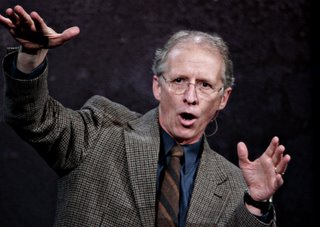
"From MJ to Piper" :Together for The Gospel Part 2


From MJ to Piper


A couple of years ago, I went to see Michael Jordan, who was my childhood hero, play against the Houston Rockets during his final year of pro basketball. The experience was a bit of a disappointment as I saw the once invincible MJ look like a mere human as he struggled, leading his team, Washington Wizards, to a defeat against the Rockets.

So as I anticipated John Piper's talk last week, I was a little nervous (for whatever reason) that I may once again experience another disappointing moment from one of my heroes. As the day of Piper's talk came, I wasn't expecting too much from Piper's message as I told my friend, Geoff, since we had probably heard this talk on 'preaching' like 5 billion times, so the only real excitement for me was to physically see Piper. But to my amazement and God's mercy, Piper probably gave the single greatest sermon/talk I have ever heard.

Piper, as always, spoke with weighty intellectual depth coupled with deep authentic passion for God's truth. Piper's balance of fire (passion) and light (truth) for God and Christ has always inspired me (since it seems so rare for a person to have both qualities), and seeing and experiening it live for the first time, made me feel like the very presence of God was there.

In Piper's talk, he spoke on:

1. Preaching that is aware of the glory of God
2. What you believe about the glory of God?
3. How do people awaken to the glory of God?

a. Essential components of the gospel

1. The Gospel is an objective message about Christ, that is, it's about a historic Christ which did something in history apart from us.
2. The Gospel is a message about Christ's accomplishments, like propitiation, expiation, and fulfillment of the law.
3. The Gospel is received by faith a lone
4. The Gospel is about benefits (justification, sanctification, reconciliation, and etc.) received by faith
5. The Gospel main benefit is God, himself, or as Justin and Kevin would say "Being with God"

4. How does the glory of God relate to expository preaching?


My Takeaway

My main takeaway from Piper's sermon is that God has chosen to reveal his glory in the gospel, which is spoken in WORDS, therefore as teachers/leaders of the church, we need to expound the gospel from the Bible to people in order to awaken them to the beauty and glory of Christ (2 Corinth. 4), and not rely too heavily on other methods

Sunday, April 30, 2006

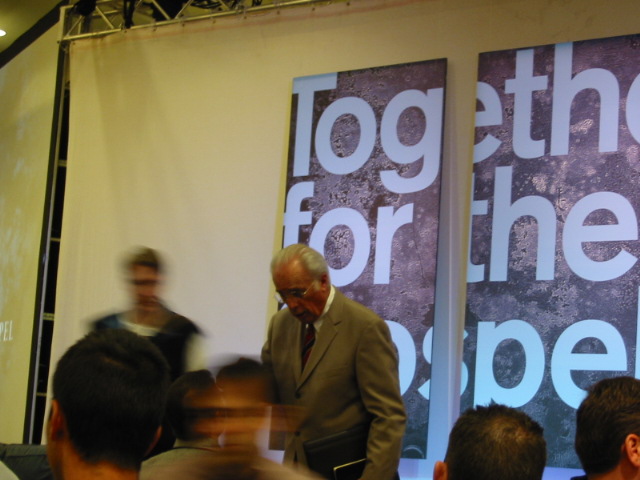
Together for the Gospel Part 1

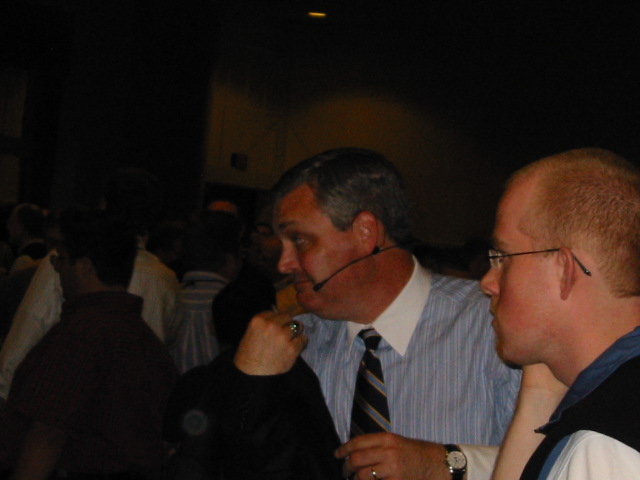
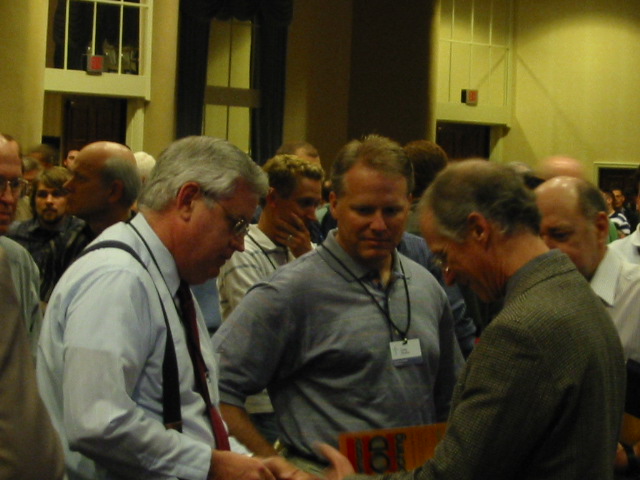
The epic conference was really good. I really enjoyed being with 2,000 of my fellow brothers in Christ, who are so committed for the gospel of Christ. Here’s a belief summary of what I learned from each of the speakers:

Mark Dever – “The Pastor’s Understanding of His Own Role”


Using 1 Corinthians 4, Dever taught that a real minister has 3 marks: 1) a person with a cross-center message 2) a person with a cross-centered life 3) a person who has a cross-centered followers

Dever’s message reminds me that my ministry is a gift from God, who is my master and judge.

Ligon Duncan – “Preaching from the Old Testament”

Duncan taught us the importance of understanding and teaching the OT Testament and he gives 8 points on how to do it:

  1. Preach the OT has a Christian book
  2. Preach expository
  3. Preach Christ
  4. Preach that there is one plan of redemptive history
  5. Preach grace
  6. Preach Character of God
  7. Preach Experientially
  8. Preach for the Christian life (moral law/3 rd use of the law)

Al Mohler – “Preaching with the Culture in View”

Mohler reminds us that culture isn’t irrelevant, but as teachers of God’s word, we shouldn’t be too embedded in it. Mohler also reminds the audience that we should engage in the culture always with the mind and mission to make known the gospel of Christ.

Mohler also describes our culture as: 1) seeking self-fulfillment 2) being self-sufficient 3) self-defined 4) self-absorbed 5) self-transcendent 6) self-enhanced and 7) self-secured.

R.C. Sproul – “The Center of Christian Preaching: Justification by Faith”

Dr. Sproul gave a passionate and heart-felt plea to church leaders to remain firm and faithful to the doctrine of justification. Dr. Sproul reinforces the need to hold on to the doctrine of justification (faith alone) by reminding and analyzing for us theCatholic’s view of justification (faith + works).

John Piper – “Why Expositional Preaching is Particularly Glorifying to God”

Dr. Piper talk was awesome. I’ll write a full article about it later.

C.J. Mahaney – “Watch Your Life and Doctrine”

I thanked God that C.J. was at the conference. He really made the conference fun and exciting with all his clever and funny comments. (You really had to be there to understand why he made the conference so special).

CJ spoke about how church leaders need to watch their life and doctrine, reminding them with 1Timothy 4, that the consequence of this, is salvation for the minister and his congregation (there is an eternal consequence).

John MacArthur – “40 Years of Gospel Ministry”

Dr. MacArthur spoke from his heart about his experiences at Grace Community Church. I loved it when he shared about how bad his preaching was during his early years in ministry, it was so bad that one of his professor, who MacArthur truly admired, wrote “YOU MISSED THE WHOLE POINT” on a piece paper given to him after his sermon. These and other stories really gave me a better perspective on this godly man. If you’re a MacArthur fan, you need to get a copy of his talk.

Monday, April 24, 2006

"God Creates the Universe": Reflection on Heb. 11:1-3

1Now faith is the assurance of things hoped for, the conviction of things not seen. 2For by it the people of old received their commendation. 3By faith we understand that the universe was created by the word of God, so that what is seen was not made out of things that are visible. - Heb. 11:1-3

God Creates the Universe

In verse 3, the writer of Hebrews states that when Christians see the universe they understand that it was created by God.

Difference in Belief

So how come a Christian can see that the universe was created by the God of the Bible, but most non-Christians can't?

Here are some reasons why:

1. God has revealed this truth in His authoritative Word (the Bible)

15He is the image of the invisible God, the firstborn of all creation. 16For by[f] him all things were created, in heaven and on earth, visible and invisible, whether thrones or dominions or rulers or authorities--all things were created through him and for him (Col. 1:15-16)


2. God has opened the Christian's eye and heart to see and love the truth about the world through the Bible and the Holy Spirit

14The natural person does not accept the things of the Spirit of God, for they are folly to him, and he is not able to understand them because they are spiritually discerned. 15The spiritual person judges all things, but is himself to be judged by no one. 16"For who has understood the mind of the Lord so as to instruct him?" But we have the mind of Christ. ( 2 Corinthians 2:14-15)

3. Nonbelievers are still enslaved by their sins, thus they suppress the truth about God

19For what can be known about God is plain to them, because God has shown it to them. 20For his invisible attributes, namely, his eternal power and divine nature, have been clearly perceived, ever since the creation of the world, in the things that have been made. So they are without excuse. 21For although they knew God, they did not honor him as God or give thanks to him, but they became futile in their thinking, and their foolish hearts were darkened. 22Claiming to be wise, they became fools, (Romans 1:19-22)


Blind Faith?

If this is so, is the Christian faith one that is "blind", that is, is a Christian irrational for believing in biblical truths about the world, like intelligent design?

I don't think so, because there is nothing irrationally for a person to trust in a God, who is invisible (1), all-knowing and all-powerful (Romans 11), who has made himself know through Jesus Christ (Heb. 1), who died on a cross and rose from the dead (1 Corinthians 15) and has been changing the hearts of people in the past and the present through the Holy Spirit (Heb.11).

But in fact, to take a set of facts and observations from the world, and draw from them a conclusion( 2) of the nonexistence of God is a greater leap of "faith" than a Christian that trusts in a God, who has revealed himself in history, the world, and in the Bible.


Notes:

(1) "The conviction of the unseen" in verse 1, isn't saying that the Christian faith excludes all visible evidences, but that their ultimate trust in the unseen future is in a living God, who is personally invisible, but his works have been and are being seen through history, the world, and the Bible.

(2) All conclusions from observing facts and evidences are opinions, that is, there is a subjective component to all human deductions, therefore an atheistic scientist can not say they are being "objective" and a Christian is being "subjective" but both are subjective in that the Christian has adopted a Christian worldview through the Bible and Holy Spirit (See Point #2) and the nonbeliever is still subjected to his/her "fleshly" worldvew (See Point #3).

Saturday, April 22, 2006

Together for the Gospel


Every year, 4 sporting events get me really excited; 1. Opening Day of NBA 2. NBA All-Star Weekend 3. NCAA March Madness 4. NBA Playoffs.

Next Wednesday to Friday, I will be attending an event that has gotten me as excited as all these basketball events and maybe even a little bit more, that is, I am going to “ Together for the Gospels Conference” in Louisville, Kentucky.

The event has an All Star line-up with, CJ Mahaney, Ligon Duncan, Al Mohler, Mark Dever, R.C. Sproul, John MacArthur, and PIPPPPPPPPPPPPPPPPPPPPPPPPPPPPPPERRRRRR.


For more info. see:

http://www.togetherforthegospel.org/

Thursday, April 20, 2006

Christian Activism?

Should the church be engaged in social activism?

1. Michael Horton is against social activism for the church.

See:

http://www.christianitytoday.com/global/printer.html?/ct/2006/001/2.43.html


2. John Frame responds to Michael Horton's article, with an appeal for social activism.

http://www.christianculture.com/cgi-local/npublisher/viewnews.cgi?category=3&id=1145485285


What do you guys think?

DANNY


taken from Vanessa's and Alan's blog:

http://www.alanvanessa.blogspot.com/

Book Recommendations


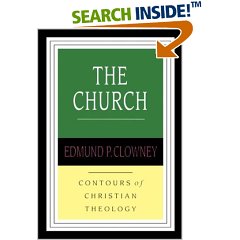
The Church (Contours of Christian Theology) by Edmund Clowney

Dr. Clowney's book is a great book on the biblical definition of the church and it's mission. This book also deals with some controversial topics such as the charismatic movement and the role of women in the church. I would highly recommend this easy-to-read and comprehensive book of the church for all church leaders


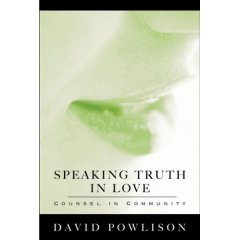
Speaking Truth in Love by David Powlison

Dr. Powlison states early in his book, that the gospel is the heart of biblical counseling (an action all Christian should be doing regardless of one's church position), and not just something Christians accept during their conversion. Then Dr. Powlison unpacks how Christians should counsel through the gospel as individuals (Part 1) and as a corporate body (Part 2) by examining scripture, giving personal models, and sharing his godly wisdom. So, if you want to learn how to counsel or love people through the gospel and how the church should pursue counseling formally and informally, this book is perfect for you.


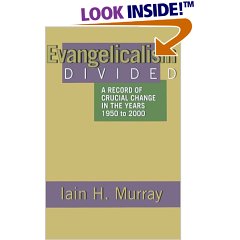
Evangelicalism Divided: A Record of Crucial Change in the Years 1950 to 2000 by Iain Murray

This book is a historic analysis (between the periods of 1950 to 2000) of how generally, evangelicals have lost their identity of standing firm for the gospel for the sake of ecumenicalism (church unity) and intellectually credibility. I thought this book was very helpful in understanding how good evangelicals (Billy Graham, J.I.Packer, and Marty Lloyd Jones) from the past, have dealt with unity among liberals and to see their successes and sadly their many failures, thus giving us the privilege of learning immensely from them. I also thought this was an important book for me, especially in regards to the current issues surrounding the PCUSA

Wednesday, April 19, 2006

Thoughts on Redemption


"Redeemed man must not internalize his salvation so that he thinks narrowly in terms of a "soul-saving" deliverance. To the contrary, redemption involves his total life-style as a social, cultural creature. Rather than withdrawing narrowly into a restricted form of "spiritual" existence, redeemed man must move out with a total-and-life perspective."
- pg. 110 of The Christ of the Covenants by O. Palmser Robertson.

Monday, April 17, 2006

Should Churches Leave PCUSA?

A Classical Prebyterian's blog has posted a blog article entitled "Schism Never?Ever? . Within that article, he as a link to David Teague's (from VOW.org) article, which tries to make a case that evangelicals should not separate from the PC(USA).

I think the article is pretty good, but his case is ultimately not convincing, because in my opinion, he has wrongly equated the denomination with the church.


John Frame writes:

It is fairly obvious that Novatian and Donatus should not have left the one, true church to start their own churches. They were, in truth, "schismatic." Sometimes today, one believer will call another one "schismatic" when he leaves one denomination to join another. Is that fair?

I do believe that it is possible to commit the sin of schism today. Most of the time, when people start new denominations, adding to the divisions in the body of Christ, I do not hesitate to call them schismatic. I also consider them schismatic when they switch denominations for the same reasons that motivated Novatian and Donatus: pride, unwillingness to submit to legitimate discipline, desire for autonomy.
2 But in many, perhaps most, situations where people make such transfers, there is no schismatic behavior at all. The true church is scattered among many denominations today. Often transfer is simply a matter of wanting to go from one part of the church to another, to share the gifts of Christians in a different group. Let us become clear about this: leaving the church is one thing; leaving a denomination quite another. The former is a very serious matter, the latter much less so.

This is the sort of practical case in which it is very dangerous for us to identify the New Testament church with some modern denomination. That confusion can lead to unfair judgments against one another. We should rather seek to make the right distinctions, to judge wisely. The church is found in the denominations; but the denominations are not the church.


Take from:
http://www.thirdmill.org/newfiles/joh_frame/PT.Frame.EVR.3.html

To see John Frame's full argument, read his book "Evangelical Reunion", which can be found here:
http://www.monergism.com/thethreshold/articles/bio/johnframe.html

Sunday, April 16, 2006

Who Is Wise? Reflections on James 3:13-18

13Who is wise and understanding among you? c. 14But if you have bitter jealousy and selfish ambition in your hearts, do not boast and be false to the truth. 15This is not the wisdom that comes down from above, but is earthly, unspiritual, demonic. 16For where jealousy and selfish ambition exist, there will be disorder and every vile practice. 17But the wisdom from above is first pure, then peaceable, gentle, open to reason, full of mercy and good fruits, impartial and sincere. 18And a harvest of righteousness is sown in peace by those who make peace. - James 3:13-18


Who is wise?

13Who is wise and understanding among you?

1. James states that godly wisdom (v.17) is shown and known through one's good conduct (v. 13).

By his good conduct let him show his works in the meekness of wisdom.

2. People have ungodly wisdom if they have jealous and selfish hearts (v.14)

14But if you have bitter jealousy and selfish ambition in your hearts, do not boast and be false to the truth (wisdom).

3. Ungodly wisdom is earthly, unspiritual, and demonic. (v.15)

15This is not the wisdom that comes down from above, but is earthly, unspiritual, demonic.

4. Ungodly wisdom produces chaotic and evil effects (v.16)

16For where jealousy and selfish ambition exist, there will be disorder and every vile practice.

5. Godly wisdom is and produces peace, kindness, open-mindedness, and love (v.17)

17But the wisdom from above is first pure, then peaceable, gentle, open to reason, full of mercy and good fruits, impartial and sincere.

6. Godly wisdom, which is and produces peace, cultivates righteousness (v.18)

18And a harvest of righteousness is sown in peace by those who make peace


From these verses, I think there are at least two principles that determine if we have godly wisdom. The first principle to determine if we have godly wisdom is our motivation. (See v.13-14). Are we seeking to show our wisdom mainly to prove someone is wrong or to increase our pride, or are we using our wisdom for the other person’s well being and for God’s glory. Secondly, to know if we have godly wisdom, we need to examine the effects of our wisdom (See v. 16-18), that is, does it produce peace, kindness, and love, or does it produce disorder and hatred for people.

May God give us godly wisdom,

Dan

1st Annual Crab Day Pictures