Monday, July 31, 2006

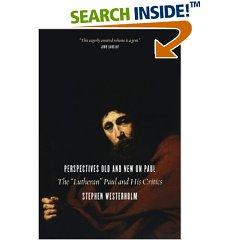
Book Recommendation: “Perspectives Old and New on Paul


Stephen Westerholm’s “Perspectives Old and New on Paul: The “Lutheran” Paul and His Critics” is probably the best book to get acquainted not only with the New Perspectives on Paul (NPP), but to also brush up on the Old Perspective on Paul or the “Lutheran” position (Westerholm defines “Lutheran” as the basic traditional/reformed positions). The book is divided into two major selections, with the first part being a survey of some of the important “players” in Pauline theology, such as the historic “Lutheran” scholars (Augustine, Luther, Calvin and Wesley), the modern “Lutheran” scholars (Cranfield, Schreiner, Thielman), and some proponents of the NPP (Sanders, Dunn, and Wright). This selection alone is worth the price of the book, as I can’t think of any other resource that gives such a broad overview of all the “key” scholars in the debate.

The second selection, Westerholm gives a reasonable and strong exegetical defense for his “Lutheran/traditional/reformed” position by examining key words and phases in the debate such as examining Paul usage of “righteousness” (dikaiosness) and “law”, and by analyzing Paul’s thoughts on “justification by faith” in each of his epistles. If anyone wishes to seriously engage in the Pauline debate and I would highly recommend this book.

Friday, July 28, 2006

Christian Social and Political Engagement

Check out this discussion with Tony Campolo and Russell Moore on the Al Mohler Radio Show.

Campolo thinks Christians should broaden the social issue to more than the abortion issue, and Moore thinks the abortion issue is the ultimate issue. Interesting stuff.

http://www.albertmohler.com/radio_show.php?cdate=2006-07-21

Sunday, July 23, 2006

Congratulations Ariane and Tony!! :)

The wedding party....

Kunal, Brad, and Dan

Tony's amazingly cute son, JOSH!! :)
Dan in rare form, on the dance floor.

Julia and Kunal, getting rough.....

Thursday, July 20, 2006

New Paul Perspective Part 1


The New Paul Perspective (NPP) is a theological framework which suggest for a new understanding of Pauline theology in which 2nd Temple Judaism is viewed primarily as a religion of "grace" rather than one of "legalism". Therefore, Paul's critique of the Pharisees was not primarily one of legalism (trying to earn salvation by works), but one due to nationalistic boasting which required Gentiles to convert to Judaism (proselyte) in order to be identified as God's people.

The three most prominent NPP proponents are E.P. Sanders, James Dunn, and N.T. Wright. I personally have not studied first-hand any of Sander's and Dunn's works (even though I have read critiques of their works), but I have read quite a few of Wright's articles and books, including "The New Testament and the People of God" and "The Climax of the Covenant".

With that being said, I will try to examine the New Paul Perspective with a focus on Wright's work by addressing the following questions:

1. What are the NPP proponents trying to emphasize and say?
2. What are the major criticisms of the NPP, especially Wright, and are they valid?
3. How should the church respond to the NPP, namely Wright?

Tuesday, July 11, 2006

BETTER MICHAEL JORDANS IN "HEAVEN"????

Here's a quick summary of a great article entitled "Heaven:Not Just an Eternal Day Off" by the late Anthony Hoekema, who taught at Calvin Theological Seminary.

Is heaven boring?*

"Life in heaven sounds downright boring, if some descriptions are to be believed. In my boyhood, psalms were sung very slowly in church, and I thought heaven was like that—a place where one sat on hard benches all day long and sang Dutch Psalms. I was not enthralled. Huck Finn thought heaven was a place where a person would "go around all day long with a harp and sing, forever and forever." This future life is often seen as an eternal existence without bodies. Also, it is thought of as "above," somewhere off in space, far removed from this earth—an escape, in fact."

Heaven is a tempory existence*

"Are we then to spend eternity in space, disembodied spirits who flit from cloud to cloud, plucking golden harps in an endless day off? We can agree with the element of truth in these teachings: Paul tells us that when he dies he will go to be with Christ (Phil. 1:23), who has now been taken up into heaven (Acts 1:11). And he also says that this state is "away from the body and at home with the Lord" (2 Cor. 5:8). But, and here is the critical point, this will be a temporary existence—one where we shall eagerly await the resurrection of the body to take place on the last day, at Jesus' second coming.

Ressurection is forever*

"Resurrected bodies are not intended just to float in space, or to flit from cloud to cloud. They call for a new earth on which to live and to work, glorifying God. The doctrine of the resurrection of the body, in fact, makes no sense whatever apart from the doctrine of the new earth."

Renewed and Purified, not Annihilated*

"Hoekema quoting Edward Thurneysen writes, "The world into which we shall enter in the Parousia (2nd coming) of Jesus Christ is therefore not another world; it is this world, this heaven, this earth; both, however, passed away and renewed. It is these forests, these fields, these cities, these streets, these people, that will be the scene of redemption. At present they are battlefields, full of the strife and sorrow of the not-yet-accomplished consummation; then they will be fields of victory, fields of harvest, where out of seed that was sown with tears the everlasting sheaves will be reaped and brought home" (Zwischen den Zeiten, 1931, p. 209)."

Restoration, not the Destruction of "WORK" in the New Heaven and Earth*

"In the resurrection we shall retain our individuality, but in a heightened way. This means that we shall not only still possess the gifts God gave us, but that our potential for exercising these gifts will then be realized to the full—as it never was in this life. Using the analogy between the talents of a child and the fully developed gifts of an adult, Abraham Kuyper suggests that in the life to come we will retain the seeds of our present gifts, but God will then give to what is developed from those seeds a new form that will be in harmony with the everlasting glory of his kingdom (Gemeene Gracie, I, 461)."

"In the beginning man was given the so-called cultural mandate—the command to rule over the earth and to develop a God-glorifying culture. Because of man's fall into sin, that cultural mandate has never been carried out in the way God intended. Only on the new earth will it be perfectly and sinlessly fulfilled. Only then shall we be able to rule the earth properly."

Better Rembrants, Better Raphaels, Better MICHAEL JORDANS???*

"The possibilities that now rise before us boggle the mind. Will there be "better Beethoven" on the new earth, as one author has suggested? Shall we then see better Rembrandts, better Raphaels, better Constables? Shall we read better poetry, better drama, and better prose?"

"Will scientists continue to advance in technological achievement, will geologists continue to dig out the treasures of the earth, and will architects continue to build imposing and attractive structures? Will there be exciting new adventures in space travel? Shall we perhaps be able to explore new Perelandras? We do not know. But we do know that human dominion over nature will then be perfect. Our culture will glorify God in ways that surpass our most fantastic dreams."

Developing and Building the Kingdom, NOW*

This all means a lot for us now. If there is continuity as well as discontinuity between this earth and the new earth, we must work hard to develop our gifts and talents, and to come as close as we can to producing, in the strength of the Spirit, a Christian culture today. Through our kingdom service, the building materials for the new earth are now being gathered. Bibles are being translated, peoples are being evangelized, believers are being renewed, and cultures are being transformed. Only eternity will reveal the full significance of what has been done for Christ here on earth.

*These summary points are mine, and do not appear in the original article.

The full article can be found here:
http://www.christianitytoday.com/ct/2003/122/54.0.html

Saturday, July 08, 2006

Paul's Desire: "Resurrection From the Dead"

For his sake I have suffered the loss of all things and count them as rubbish, in order that I may gain Christ 9and be found in him, not having a righteousness of my own that comes from the law, but that which comes through faith in Christ, the righteousness from God that depends on faith-- 10that I may know him and the power of his resurrection, and may share his sufferings, becoming like him in his death, 11that by any means possible I may attain the resurrection from the dead. 12Not that I have already obtained this or am already perfect, but I press on to make it my own, because Christ Jesus has made me his own. 13Brothers, I do not consider that I have made it my own. But one thing I do: forgetting what lies behind and straining forward to what lies ahead, 14I press on toward the goal for the prize of the upward call of God in Christ Jesus. 15Let those of us who are mature think this way, and if in anything you think otherwise, God will reveal that also to you. 16Only let us hold true to what we have attained. - Phil. 3:8-16

Paul’s Desires

Knowing and embracing Christ is everything for Paul, so much so, that everything is considered "rubbish" compared to his relationship with him (Phil 3:8). Even though Paul is presently united with Christ, he understands that this relationship is not at its consummated and final state. So what is the futuristic (eschatological) state that Paul longs for? Is it being with Christ in a spiritual heavenly realm (Phil.1:21)? Or is it something else?

Paul's ultimate goal isn't just to be with Christ in the present or in heaven when he dies, but "for the prize of the upward call of God in Christ Jesus" (v.14), that is, to "attain the resurrection from the dead, which will happen when Christ comes back to fully establish his kingdom on a physical new earth and heaven (1 Corinthians 15).


Even though Paul knows that Christ will come back, he doesn't sit back and just “chill”, but he strives and presses forward to obtain “the prize of the upward call of God in Christ Jesus” (Phil 3:12-14). Just like Paul, we should also strive to obtain the "resurrection from the dead", so that we can fully enjoy Christ's presence. But how should we strive to obtain this prize?


How Should We Strive To Obtain the Prize?

First, we should know that God in his sovereign love in Christ is the one who provides the ultimate power in our striving and promises to one day complete it.

6And I am sure of this, that he who began a good work in you will bring it to completion at the day of Jesus Christ (Phil 1:6)

12Therefore, my beloved, as you have always obeyed, so now, not only as in my presence but much more in my absence, work out your own salvation with fear and trembling, 13for it is God who works in you, both to will and to work for his good pleasure. (Phil 2:12-13)

20But our citizenship is in heaven, and from it we await a Savior, the Lord Jesus Christ, 21who will transform our lowly body to be like his glorious body, by the power that enables him even to subject all things to himself (Phil 3:20)

Second, we should strive for in humility and love for others

3Do nothing from rivalry or conceit, but in humility count others more significant than yourselves. 4Let each of you look not only to his own interests, but also to the interests of others (Phil 2:3)

Third, we should hold fast to God's word

16holding fast to the word of life, so that in the day of Christ I may be proud that I did not run in vain or labor in vain. (Phil.2:16)

Fourth, we should be partners for the gospel, the message that Jesus Christ is Lord and Savior of the universe

3I thank my God in all my remembrance of you, 4always in every prayer of mine for you all making my prayer with joy, 5because of your partnership in the gospel from the first day until now. 6And I am sure of this, that he who began a good work in you will bring it to completion at the day of Jesus Christ (Phil 1:3-6)

2I entreat Euodia and I entreat Syntyche to agree in the Lord. 3Yes, I ask you also, true companion, help these women, who have labored side by side with me in the gospel together with Clement and the rest of my fellow workers, whose names are in the book of life. (Phil 5:2-3)

Fifth, we should pray, especially when anxious

6do not be anxious about anything, but in everything by prayer and supplication with thanksgiving let your requests be made known to God. 7And the peace of God, which surpasses all understanding, will guard your hearts and your minds in Christ Jesus. (Phil 4:6-7)
Wednesday, June 21, 2006

PCUSA and Recommendation #5

Yesterday, the PCUSA voted 298-221 (57% to 43%) to approval the PUP (Peace, Unity, and Purity) Report, which includes the controversial "recommendation #5", which basically allows individual governing body (presbyteries) to interpret and determine the ordination standards. For an example, a presbytery can decide that an unrepentant homosexual is "ok" to be a pastor and that this determination doesn't go against the "essential tenets of the Reformed faith", therefore making it more easier* to ordain an unrepentant homosexual person.

Despite voting in the PUP report, the PCUSA also voted that the "fidelity-chastity" ordination requirement be left in the Book of Order, which clearly defines that a ordained person must practice fidelity in marriage (between a man and woman) or "chastity" in being single.

So on the same day, the PCUSA voted in a rule (recommendation #5) that would allow some presbyteries to make it more easier to ordain unrepentant homosexuals, they also reaffirmed a requirement more or less created to prevent unrepentant homosexuals from becoming pastors.

In the end, I am not sure if we have made any progress. I believe until the PCUSA takes a definite stance on the issue of homosexual ordination, we will continue to have these "ordination wars" and we will never truly have "peace", "unity" and "purity".


*According to one blogger ( http://reformed-angler.blogspot.com/2006/06/pup-voting-underway.html), the process and results of the governing body can still be reviewed by a higher authority, therefore at least in theory it doesn't seem like the individual governing body can do whatever they want.

For more information check out:http://www.layman.org/

Tuesday, June 20, 2006

The Trinity and PCUSA

There's been a lot of buzz about the "receiving" of a report that would propose alternative names for the Trinity such as*:

1. Rainbow, Ark and Dove

2. Speaker, Word and Breath

3. Overflowing Font, Living Water and Flowing River

4. Compassionate Mother, Beloved Child and Life-Giving Womb


Without studying the issue or the report, I am inclined to agree with Rev. Lovelady which states in the Layman article " that the Trinity paper "suffers from a confusion about the name of God." He (Lovelady) said there is a difference between a name and a metaphor." It seems to me that God may express his being/character in a metaphor, but may wish to be addressed as something else, in this case I presume it should only be "Father, Son, and Holy Spirit".


* See the article entitled "Trinity paper is 'received' by GA, but not approved" by the Layman: http://www.layman.org/

Monday, June 12, 2006

Friday, June 09, 2006

1 Timothy 4:3-5: Chen's Wedding Verses

3who (false teachers) forbid marriage and require abstinence from foods that God created to be received with thanksgiving by those who believe and know the truth. 4For everything created by God is good, and nothing is to be rejected if it is received with thanksgiving, 5for it is made holy by the word of God and prayer-1 Tim. 4:3-5


During our wedding ceremony, Pastor John kinda made fun of me for picking these verses (it seems obscure and not a typical wedding verse), so I wanted to briefly give some reasons why I chose them. These verse teach and remind me that:

1. God is creator of all things good, including marriage.

3who (false teachers) forbid marriage and require abstinence from foods that God created to be received with thanksgiving by those who believe and know the truth. 4For everything created by God is good

2. God's good gifts, like marriage, are to received with thanksgiving by Christians

God created to be received with thanksgiving by those who believe and know the truth. 4For everything created by God is good, and nothing is to be rejected if it is received with thanksgiving,

3. God's gifts are good or "made holy" by 2 things: 1) the word of God and 2) prayer

5for it is made holy by the word of God and prayer

- I believe God makes his gifts holy by "the word of God" by him declaring it so, that is, he is the authority and source of what's good or bad. We see this in the creation narrative in Genesis, by which God declares his creation as "good".

- I also believe God's gift are made holy by thankful prayer from Christians (v.3 and 5), that is, the goodness of God's gift must result in praises to the glory of the Creator.


Therefore, I chose these verses because it reminds my wife and I that the goodness of marriage originates from God and is also conditoned if it is received with praises to God by us (and others).

Tuesday, May 23, 2006

Book Recommendations "Presuppositional Apologetics"

"Presuppositional apologists claim that there is no neutrality, invoking Jesus’ saying that “one cannot serve two masters” (Matt. 6:24). There can be no compromise between the wisdom of God and the wisdom of the world. Unbelief leads to distortion of the truth, exchanging the truth for a lie (Rom. 1:25). Only by trusting God’s Word can we come to a saving knowledge of Christ (John 5:24, 8:31, 15:3, Rom. 10:17). And trusting entails presupposing: accepting God’s Word as what it is, the foundation of all human knowledge, the ultimate criterion of truth and error (Deut. 18:18-19, 1 Cor. 14:37, Col. 2:2-4, 2 Tim. 3:16-17, 2 Pet. 1:19-21). So the apologetic argument, like all human inquiries into truth, must presuppose the truths of God’s Word." - John Frame from the article " Presuppositional Apologetics," for IVP Dicitonary of Apologetics


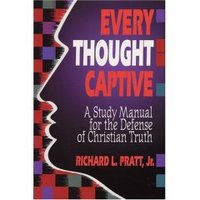
"Every Thought Captive: A Study Manual for the Defense of Christian Truth" by Richard Pratt is written for high schoolers, and it's a wonderful introduction to presuppositional apologetics. It's a brief and easy-to- read book, and I would highly recommend it to anyone who desires to share their faith in Christ.

"Apologetics to the Glory of God: An Introduction" by John Frame is also an introduction to presuppositional apologetics, but it is written at a more college/adult-level. I would still recommend Richard Pratt's book over this one, if you have never read anything substantial on apologetics. And if you want something more scholarly on presuppositional apologetics, please refer to John Frame's "The Doctrine of the Knowledge of God", which should be read by every serious teacher of the Bible.

Congrats ERIC!!!!!!!!

9Marks of a Healthy Church MEMBER: Expositional LISTENING

Sometimes we are too quick to blame the preacher for us not "getting anything" from the sermon, but maybe it's our fault because we don't really know how to listen to a sermon. Below is a few excerpts from Thabiti Anabwile's article on how to listen (Expositional Listening) to a sermon and you can find the entire article at the link below.

Dan

9Marks of a Healthy Church MEMBER: Expositional LISTENING

By Thabiti Anyabwile

What is “expositional listening”?

There is an important corollary for every member of a local church. Just as the pastor’s preaching agenda is to be determined by the meaning of Scripture, so too must the listening agenda of the Christian be driven by the meaning of Scripture. What we are listening for when the Word is preached is not primarily “practical how-to advice,” though Scripture teaches us much about everyday matters. Nor should we listen for messages and ideas that bolster our self-esteem or that rouse us for political and social causes. Rather, as members of Christian churches we are listening for the voice and message of God as revealed in His word. We are listening to hear God speak to us the things He has in His omniscient love written for His glory and our blessing. Listening for the meaning of a passage of Scripture, and accepting that meaning as the main idea to be grasped for our personal and corporate lives as Christians, is what we mean by “expositional listening.”

How can church members cultivate the habit of expositional listening?

Well, if expositional listening is so vital to the health of individual church members and the church as a whole, how does a person form such a habit? At least six practical ideas can foster more attentive listening to God’s word.
1. Meditate on the sermon passage during your quiet time.
2. Invest in a good set of commentaries.
3. Talk and pray with friends about the sermon after church
4. Listen to and act on the sermon throughout the week.
5. Develop the habit of addressing any questions about the text itself.
6. Cultivate humility.

* Taken from:

http://9marks.org/partner/Article_Display_Page/0,,PTID314526CHID598014CIID2190814,00.html

Thursday, May 18, 2006

Wednesday, May 17, 2006

More on The Da Vinci Code

Westminster Seminary (PA) has set-up a webpage to help answer questions/controversies relating to the Da Vinci Code

http://www.thetruthaboutdavinci.com/

"May 27th" -Meditations on Ephesians 5:25-33

1. Dan love Julia like Christ loved the church

25Husbands, love your wives, as Christ loved the church and gave himself up for her

2. Dan love Julia by giving up your life for her

25Husbands, love your wives, as Christ loved the church and gave himself up for her

3. Dan present Julia as holy and without blemish through God's word

26that he might sanctify her, having cleansed her by the washing of water with the word,

4. Dan love Julia like she part of your own body

28In the same way husbands should love their wives as their own bodies...31"Therefore a man shall leave his father and mother and hold fast to his wife, and the two shall become one flesh."

5. Dan make your relationship with Julia, reflect the relationship between Christ and the Church

32This mystery is profound, and I am saying that it refers to Christ and the church

Wednesday, May 03, 2006

"Do Not Be Ashamed of Lord": Mediations on 2 Timothy 1:1-14

Being ashamed of God or Christ as a 'still sanctifying' Christian is easy to do, especially when the consequences of following Christ seems too much to bear such as a lost of reputation, money, family's approval, and maybe your life.

In 2 Timothy 1-14, Paul writes a letter to Timothy encouraging him not to be ashamed of being a Christian and exhorting him not to compromise the gospel truth despite the pressure of persecution. Lets see how Paul exhorts Timothy, so that we can be encouraged not to be "ashamed of Lord" too.

1. Don't be ashamed of God but share in the suffering for the gospel and by the power of God

8Therefore do not be ashamed of the testimony about our Lord, nor of me his prisoner, but share in suffering for the gospel by the power of God,

In verse 8, Paul, who is in prison, commands Timothy not to be ashamed of God or his imprisonment, but to suffer for the gospel through the power of God. It's important to note that Paul doesn't tell Timothy to avoid suffering, but to "share in it", that is, he is reminding Timothy that in order to be a godly Christian, it will involve suffering of some kind (2 Timothy 3:12). But Paul also reminds Timothy that he is not alone in this suffering for the gospel but "the power of God "will help him.

2. Past Testimony of God's Power

We should not be ashamed or fearful in our suffering for the gospel because the power of God has been shown in the past by God's redemptive purposes in Christ.

a. God's power has been shown through our holy calling, that is, through the regeneration of our hearts by the Holy Spirit

who (God) saved us and called us to[a] a holy calling (regeneration)(v.9),

b. God's power in salvation and regeneration was given outside of our works but was received based on God's sovereign design and grace through Christ

(Being Saved/Regenerated) not because of our works but because of his own purpose and grace, which he gave us in Christ Jesus before the ages began (v.9)

c. God's power in his purpose and grace has been reveal in the glory and beauty of Christ, who has conquered death and brought live through the good news.

and which now (salvation/redemption) has been manifested through the appearing of our Savior Christ Jesus, who abolished death and brought life and immortality to light through the gospel, (v.10)

3. Present and Future Promise of God's Power

a. In verse 12, Paul is not ashamed and won't compromise the gospel in his suffering because he is convinced that God is able to protect him through the Spirit (v.14) until the day of God's judgment ( 2 Tim. 4:8)

But I am not ashamed, for I know whom I have believed (God), and I am convinced that he is able to guard until that Day what has been entrusted to me. (v.12)

b. In verse 13-14, Paul encourages Timothy to be devoted to Christ and his teaching, knowing that the Holy Spirit will also help guard the gospel

13Follow the pattern of the sound[d] words that you have heard from me, in the faith and love that are in Christ Jesus. 14By the Holy Spirit who dwells within us, guard the good deposit (gospel) entrusted to you.

Conclusion

So FPC, let us never be ashamed of God and Christ by compromising the gospel, but let us be strengthen, realizing God's power in the past and in his present and future promise of the "Holy Spirit, who dwells within us, helping us guard the good deposit".

Please also pray for our brother in Christ, Pastor (Toby) Brown, and the Mission Presbytery (PC(USA)), which will be making some critical decisions on how to deal with some tough denominational (PC(USA) issues. Pray that they will be given wisdom on how to best guard the good deposit (gospel).

See below for more information on the issues they will be facing:

http://classicalpresbyterian.blogspot.com/

http://www.albertmohler.com/commentary_read.php?cdate=2006-05-01

Tuesday, May 02, 2006

"From MJ to Piper" :Together for The Gospel Part 2


From MJ to Piper


A couple of years ago, I went to see Michael Jordan, who was my childhood hero, play against the Houston Rockets during his final year of pro basketball. The experience was a bit of a disappointment as I saw the once invincible MJ look like a mere human as he struggled, leading his team, Washington Wizards, to a defeat against the Rockets.

So as I anticipated John Piper's talk last week, I was a little nervous (for whatever reason) that I may once again experience another disappointing moment from one of my heroes. As the day of Piper's talk came, I wasn't expecting too much from Piper's message as I told my friend, Geoff, since we had probably heard this talk on 'preaching' like 5 billion times, so the only real excitement for me was to physically see Piper. But to my amazement and God's mercy, Piper probably gave the single greatest sermon/talk I have ever heard.

Piper, as always, spoke with weighty intellectual depth coupled with deep authentic passion for God's truth. Piper's balance of fire (passion) and light (truth) for God and Christ has always inspired me (since it seems so rare for a person to have both qualities), and seeing and experiening it live for the first time, made me feel like the very presence of God was there.

In Piper's talk, he spoke on:

1. Preaching that is aware of the glory of God
2. What you believe about the glory of God?
3. How do people awaken to the glory of God?

a. Essential components of the gospel

1. The Gospel is an objective message about Christ, that is, it's about a historic Christ which did something in history apart from us.
2. The Gospel is a message about Christ's accomplishments, like propitiation, expiation, and fulfillment of the law.
3. The Gospel is received by faith a lone
4. The Gospel is about benefits (justification, sanctification, reconciliation, and etc.) received by faith
5. The Gospel main benefit is God, himself, or as Justin and Kevin would say "Being with God"

4. How does the glory of God relate to expository preaching?


My Takeaway

My main takeaway from Piper's sermon is that God has chosen to reveal his glory in the gospel, which is spoken in WORDS, therefore as teachers/leaders of the church, we need to expound the gospel from the Bible to people in order to awaken them to the beauty and glory of Christ (2 Corinth. 4), and not rely too heavily on other methods