Wednesday, December 06, 2006

Laurie in Sudan

Here's a letter from my friend, Laurie, who just came back from Sudan and has graciously allowed me to post it here. Check it out to see what God is doing in Sudan


Moto Zi Ye (Greetings all)!!

Merry Christmas!! I hope you are enjoying the holidays and experiencing God’s goodness. I recently returned from a mission trip to Mvolo, Sudan. Thank you so much for your support, encouragement, and prayers. It was intense – from the living conditions to the isolation and devastation. However, amidst the difficulties was the faithfulness of God’s promises and His almighty power to redeem, renew, and restore. His mercies are new every morning.

God gave us opportunities to repair water wells and tell Bible stories. He opened doors to communicate His Word to the village and county leaders, some of whom are not believers. They even asked us to pray for them. We took a day trip to Kulu, a village that was attacked by another tribe this past May. While there, we gave supplies, shared God’s Word, and prayed for them. My heart broke to see the desolation and loss; however, I saw evidences of hope and life from changed demeanors to the beauty of God’s creation. God has not forgotten them and will restore them.

Our team leader told us that the Jur people would die for us. After living among them, I realized the truth of his words. The Jur people treated us like royalty. They gave us the best of their food and seats of honor. As we walked along the dirt paths, they ran to greet us. They embraced us into their lives, and I’ve embraced them into mine.

This trip was "extreme missions". We lived in mud huts, filtered drinking water, walked through the bush, washed our hair with dirty water, and killed roaches and other insects before entering the latrine. There was no electricity or running water. The weather was over 100 degrees on a daily basis. I’ve never been so consistently filthy, dirty, sweaty, and smelly in my entire life. However, I experienced the sufficiency of God’s grace and His strength to move to the next level of living by faith for the glory of God. I learned much about physical, mental, emotional, and spiritual perseverance while in the midst of desperate dependence on the Holy Spirit.

I can still see the "million dollar smiles" on children’s faces, hear the beating of the drums, and imagine dancing with the Jur people. There’s something life changing about seeing God work in the ends of the earth to bring salvation, redemption, hope, and healing. I’d never been so far removed from everything familiar except God Himself. It’s true: He will never leave us or forsake us. God is good and what He does is good.

For His Glory,
Laurie C. Lau
P.S. You can read more about the mission trip and ministry on www.aidsudan.org.

Monday, December 04, 2006

Ben Witherington's 12 desideratum on NT Theology

Michael Bird, a NT scholar, has posted Ben Witherington's 12 desideratum (something to be desired) on NT Theology on his blog. Here are a few that are interesting and helpful:

(3) If you are an Evangelical, then it is imperative that you interact with non-Evangelical treatments of the text and listen to the church fathers.

(4) As J. Bengel said: apply the whole of yourself to the text.

(5) The text should not be watered down or dumbed down, but one should ratchet up one's attention and degree of devotion to the text.

(7) Western theologians who live in an individualist society should try to understand the collective and honour-shame mindset of the majority world.

(10) Theologizing needs to be done across denominational lines.

(11) Doing NT Theology requires humility not hubris.

(12) The time is ripe for us to redraw boundaries and rethink our differences. "Perhaps all Evangelicals need to spend more time sitting at hte same table, sharing communion, serving one another, serving together in missions, listening to one another, loving one another, and leaving behind triumphalism based on our ecclesiological and theological differences".

Sunday, December 03, 2006

Friday, December 01, 2006

Mercy Ministries

In the current Modern Reformation, there are two articles articulating two different point of views on mercy ministries written by two Reformed authors, Randy Nabors and William Smith.

In Randy Nabor's article ," For Goodness Sake, Do Something", he takes the stance that the church, as a corporate body, should and must do mercy ministries. He writes:

I would submit that such negative arguments spring from an undeveloped theology of the church, a defective theology of missions, and the absence of a theology of mercy. We are called to be a new community, to be a body of believers. We are called to help the widows in our midst (1 Tim. 5:3-16); we are given the example of sharing with other congregations who face hard times (I Tim. 6:18); and pastors are instructed to "command" those who are rich in this world to be rich in good deeds. We are given the model in Acts 6 of an ethnic and pragmatic solution to a mercy need within and by the local congregation. We see the community of Israel, as a nation, condemned for a hypocritical practice of religion by not sharing their food with the hungry (Isa. 58). How can we be seen as a "city"(Matt. 5:14-16) if we do not do good works corporately? Congregations are designed by God to be public entities that people see, and unfortunately many of our congregations are "cities" which are seen to do nothing but for themselves

Mr. Nabor believes the church must do mercy ministries because it's essential in evangelizing. He writes:

There are also some who think that we should help only the Christian poor, and those who are within our own congregations. I have always found the argument to only help the poor in the church largely irrelevant if we are obeying the Lord by preaching the gospel to the poor. Was this not his mandate (see Luke 4:18 as mentioned above)? Is it not ours as well? If we are evangelizing among the poor we will have them in the church, and what every poor community in the world needs is a gospel-preaching, holistic, and vital local church in its midst. Poor people need to be saved; they need a whole new set of cultural values built upon the Word of God. They need the practice and experience of the love of the saints and then their families will be rebuilt. And they will have hope, which is the absolute most powerful engine of economic change

On the other hand, William Smith states in his article, "Kyrie Eleison", that Christians should minister to those outside the church, but it shouldn't be one of the essential "marks" of a church. He writes:

Do we as Christians have an obligation to the poor in general? Of course we do. I am willing to help the poor by all sorts of means-kingdom ministries carried on by Christians, responding to the need in front of me with what I have, charitable organizations that are or are not faith-based, and by the paying of taxes. What I am not willing to say is that ministry to the poor of the community is a mark of the church or a necessary component of its health. Indeed, I would argue just the opposite-that the church is weakened and rendered less effective when it puts such ministries at the heart of its life.

Mr. Smith also beliefs that the church should first do mercy ministries to it's own member before those outside of the church. He writes:

First, it is clear that Paul here sticks to the pattern of the rest of the New Testament in putting the primary emphasis on the church's ministry to the church family. If some of this ministry spills over to the world, fine, but good done in the community is not a part of a word-deed strategy for evangelizing the city, nor is it anywhere near the heart of the church's mission.

And because the needs within the church are so great, mercy ministries to outsider shouldn't be the main instrument of evangelizing.

The apostolic practice shows that the church's ministry of mercy is to its members. We have a long way to go before there is not a needy person among us, and we serve one another in humility and love. But, when the church so cares for its own, it demonstrates to the world a "see-how-they-love-one-another" life that testifies to the power of the gospel and may be used of God to provoke the world to jealousy.

What the church needs is a renewed commitment to the mission Jesus gave: "Go therefore and make disciples of all nations, baptizing them in the name of the Father and of the Son and of the Holy Spirit, teaching them to observe all that I have commanded you" (Matt. 28:19). The mission is to make disciples. The means of making disciples are baptizing and teaching. He did not say, Go make disciples by engaging in mercy ministry.

My Thoughts:

First, I think both articles were well written, and give good biblical support for their views. I tend to agree with Mr. Nabor that evangelism, especially to the poor, should be accompanied and initiated through some type of mercy ministry, whether through something "small" like inviting and providing a one time dinner for someone that's poor or "big" like an elaborate after school program for the neighborhood kids. I also agree with Mr. Smith that the church should first minister to it's own members, but I wonder if he would agree that part of ministering to the local congregation entails teaching them to love those outside of the church, thus organizing some kind of mercy ministry, whether "small" or "big", to teach them.

I also think part of the contention involves the use of the language of having mercy ministries as one of the essential marks of a truth church (Preaching, discipline, and sacrament, normally being the other three). Personally, I don't mind saying some kind of mercy ministries is an essential mark of a truth church ( I think acts of love to non-Christians is a mark of a true Christian, and a church is made up of Christians), and I don't think anyone in the argument is trying to devalue the other 3 marks by saying that mercy ministries is essential, especially the need to verbally communicate the gospel in evangelizing.

So in the end, I think I would side more with Mr. Nabor's point of view, but doing so with Mr. Smith's precautions in mind.

[HT Justin Taylor]

Monday, November 27, 2006

Happy 6 month anniversary!! :)

Justification and A Tale of Two Imperial Cities


Anthony Lane's writes in an article entitled "A Tale of Two Imperial Cities" about how "[i]n 1541, leading Protestant and Roman Catholic theologians meeting at the Regensburg Colloquy produced an agreed-upon statement on the doctrine (justification). A few years later the Council of Trent defined the doctrine in a deliberately anti-Protestant manner, rejecting the position agreed at Regensburg" [1]

Lane concludes that in Regensburg, both major Protestant and Catholic theologians believed in two types of righteousness, by which Christ's imputed rightousness is the basis for justification.

"At Regensburg, Protestant and Roman Catholic theologians reached a temporary agreement on justification. This was based upon the acceptance of both inherent and imputed righteousness and on the recognition that because of the imperfection of our inherent righteousnes, Christ's righteousness needs to be imputed to us in order for us to be acceptable to God. " [2]

Lane also concludes that the Council of Trent was deeply anti-Protestant, but warns us not to equal modern Catholic belief of justification with the "Tridentine Decree"

"The Tridentine Decree on Justification is a vitally important document, but we must not a fall into the mistake of simply equating it with the Catholic doctrine. Trent is what the Roman Catholic Church chose to say at that time in response to what it then understood the Reformers to be saying. To understand what the Roman Catholic Church today is saying to what it now understands Protestants to teach, we need to listen to contemporary Roman Catholic theology." [2]


[1] Article found in the book "Justification in Perspective:Historical Developments and Contemporay Challenges" edited by Bruce McCormack pg. 119

[2] pg142

Tuesday, November 07, 2006

A Warning in the Imputation Debates


Simon Gathercole writes:

"A statement by Robert Gundry on the (non) imputation of Christ's righeousness in particular has sparked a response by John Piper, and Gundry and Don Carson have also entered the same debate from different stances. It is not not my purpose here to enter this debate. But it should be said that there is clearly a great deal of diversity of opinion on the matter. This is, of course, not sufficient in itself to let discretion take the better part of valor. But in case, the diversity seems to arise out of the complexity of the New Testatment evidence, not because one side is particularly hidebound to tradition and the other wallowing in the desire for novelty or for doctrine that is more amendable to culture. I would not myself deny this traditional understanding of imputation. Still, because of the complexity of the issue, I would propose that the requirement that is is specifically Christ's righteousness that is imputed to believers should not feature on evangelical statement of faith. To make such a finely balanced point an article of faith seems a dangerous strategy. Nonetheless, it is very clear that justification is still christological through and through. Both the cross and the present action of Christ are the vital grounds of justification." [1]


[1] pg 223 of "Justification in Perspective: Historical Development and Contemporary Challenges", edited by Bruce McCormack

Monday, November 06, 2006

Gaffin on Definitive Sanctification


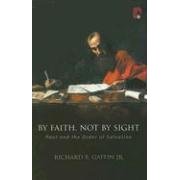
"Further, for Paul sanctification is not only a process involving us in our activity but is also and first of all "definitive sanctification," a decisive, definitive, once-for-all act of God, underlying our activity. A central point of Romans 6-7, for instance, is that while sin is a reality for the believer, it is not my Lord. Because of union with Christ in his death and resurrection I am no longer sin's slave. Sin indwelling but not overpowering; for the believer indwelling sin is not enslaving sin." [1]

"The deepest motive for our sanctification, for holy living and good works, is not our pyschology, not how I"feel" about God and Jesus. Nor is it even our faith. Rather, that profoundest of motives is the resurrection power of Christ, the new creation we are and have already been made a part of in Christ by his Spirit." [2]

[1] "By Faith, Not By Sight: Paul and the Order of Salvation" pg 77-78

[2] pg 78

Sunday, November 05, 2006

Monday, October 30, 2006

Happy BDay Danny


Photo Sharing - Upload Video - Video Sharing - Share Photos

The Center of Paul’s Theology and the Order of Salvation


“The central soteriological reality is union with the exalted Christ by Spirit-created faith. That is the nub, the essence, of the way or order of salvation for Paul. The center of Paul’s soteriology, at the center of his theology as whole, then, is neither justification by faith nor sanctification, neither the imputation of Christ’s righteousness nor the renewing work of the Spirit. To draw that conclusion, however, is not to “de-center” justification (or sanctification), as if justification is somehow less important for Paul than the Reformation claims. Justification is supremely important, it is absolutely crucial in Paul’s gospel of salvation” (cf.Eph.1:13). Deny of distort his teaching on justification and that gospel ceases to be gospel; there is no longer saving “good news” for guilty sinners. But no matter how close justification is to the heart of Paul’s gospel, in our salvation, as he sees it, there is an antecedent consideration, a reality, that is deeper, more fundamental, more decisive, more crucial: Christ and our union with him, the crucified and resurrected, the exalted, Christ. Union with Christ by faith-that is the essence of Paul’s ordo salutis. [1]

[1] pg. 43 From Richard Gaffin’s “By Faith, Not by Sight: Paul and the Order of Salvation”

Friday, October 27, 2006

This is just sad

My fellow PCUSAer, (Backwood Presbyterian) got kicked out of Dr. Michael McMahon's message board (www.apuritansmind.com) because he is a member of the PCUSA. I echo BP in his exhortation not to use any more of Dr. McMahon's services.


Monday, October 16, 2006

ditka


“If God had wanted man to play soccer, He wouldn't have given us arms”

Understanding God’s Wrath


In Leon Morris’s book The Apostolic Preaching of the Cross, he gives us some insights on how to think about God’s wrath.

1. There’s no antithesis between God’s love and wrath:

“Perhaps the difficulty arises because we are making a false antithesis between divine wrath and the divine love. We are handicapped by the fact that we must necessarily use terms properly applicable to human affairs, and for us it is very difficult to be simultaneously wrathful and loving. But, upon analysis, this seems to be largely because our anger is such a selfish passion, usually involving a large element of irrationality together with a lack of self-control. Nevertheless, even in human affairs, such a thing as “righteous anger” is not unknown when some, at least, of the more unworthy elements are absent, and we catch a glimpse of a fiery zeal for the right which be perfectly compatible with pure love”. [1]

2. God’s wrath isn’t some irrational and uncontrollable anger:

“Those who object to the conception of the wrath of God should realize that what is meant is not some irrational passion bursting forth uncontrollably, but a burning zeal for the right coupled with a perfect hatred for everything that is evil.” [1]

3. Propitiation is God’s act of love:

“…(P)ropitiation is understood as springing from the love of God. Among the heathen, propitiation was thought of as an activity whereby the worshipper was able to himself to provide that which would induce a change of mind in the deity. In plain language he bribed his god to be favourable to him. When the term was taken over into the Bible these unworthy and crude ideas were abandoned, and only the central truth expressed by the term was retained, namely that propitiation signifies the averting of wrath by offering of a gift which secures the propitiation is from God Himself. [2]


[1] pg. 208-209

[2] pg. 211

Friday, October 13, 2006

The Declaration of Independence


Julia, John, and I signing The Declaration of Independence

Saturday, October 07, 2006

WJDFW – You Must Be Born Again

“Jesus answered…”Do not marvel that I said to you, “You must be born again”- John 3:5 and 7

“Jesus answered him “Truly, truly, I say to you, unless one to born again, he cannot see the kingdom of God” – John 3:3

Based on John 3, Piper sees Jesus as commanding that everyone be “born again”, that is, he demands everyone to be “alive to God and see his kingdom as true and supremely desirable.” [1]

So how does someone become “born again”? Piper writes:

“We must be born again. But this is a gift from God…Look away from yourself. Seek from God what he alone can do for you. Moral improvement of the old you is not what you need. New life is what the whole world needs. It is radical and supernatural. It is outside our control. The dead do not give themselves new life. We must be born again-“not … of the will of the flesh nor of the will of man, but of God” (John 1:13). That is what Jesus demands from the world. [1]

[1] pg 37-39

Thursday, October 05, 2006

What Jesus Demands From the World Part 1

I just got my copy of John Piper’s new book, “What Jesus Demands from the World.” In my excitement, I just finished the introductory chapter of the book, where Piper describes his aim for the book in typical Piper-ish fashion:

“The aim of this book is God-glorifying obedience to Jesus. To that end I am seeing to obey Jesus’ last command:” Make disciples of all nations…teaching them to observe all that I have commanded you” (Matt. 28:19-10) [1]


I can’t wait to dive more into this book and to have my soul satisfied with the presence of God.

Tuesday, October 03, 2006

The Drama of Scripture


“The Drama of Scripture: Finding Our Place in the Biblical Story” by Craig Bartholomew and Michael Goheen is probably the best book I have read all year. In Bartholomew and Goheen’s book, it sets out to help Christians find their purpose within the larger biblical story by organizing the story into a six-act structure:

Act 1: God Establishes His Kingdom: Creation

Act 2: Rebellion in the Kingdom: Fall

Act 3: The King Chooses Israel: Redemption Initiated

Scene 1 A People for the King

Scene 2 A Land for His People

Interlude: A Kingdom Story Waiting for Ending: The Intertestamental Period

Act 4: The Coming of the King: Redemption Accomplished

Act 5: Spreading the News of the King: The Mission of the Church

Scene 1 From Jerusalem to Rome

Scene 2 And into All the World

Act 6: The Return of the King: Redemption Completed [1]

Not only is this book helpful through it’s six-act structure, in my opinion, it also seems to be making the right emphasis within the larger biblical story. The authors states their 3 emphases as:

1. Comprehensive scope of God’s redemptive work in creation.

“First, we stress the comprehensive scope of God’s redemptive work in creation. The biblical story does not move toward the destruction of the world and our own “rescue” to heaven. Instead, it culminates in the restoration of the entire creation to its original goodness.” [2]

2. The believer’s own place within the biblical story.

“Second, we emphasize the believer’s own place within the biblical story. Some refer to four questions as foundational to a biblical worldview: “Who am I?” “Where am I?” “What’s wrong?” “What’s the solution?” Tom Wright adds an important fifth question: “What time is it?”…As part of our telling of the Bible’s grand story, we will explore the biblical answers to these five questions. [2]

3. Centrality of Mission

“Third, we highlight the centrality of mission within the biblical story. The Bible narrates God’s mission to restore the creation. Israel’s mission flows from this: God chose a people to again embody God’s creational purposes for humanity and so be light to the nations, and the Old Testament narrates the history of Israel’s response to their divine calling. Jesus comes on the scene and in mission takes upon himself Israel’s missionary vocation. He embodies God’s purpose for humanity and accomplishes the victory over sin, opening the way to a new world. When his earthly ministry is over, he leaves his church with the mandate to continue in that same mission. In our own time, standing as we do between Pentecost and the return of Jesus, ‘our central task as God’s people is to witness to the rule of Jesus Christ over all of life. [2]


If you want helpful resources relating to this book check out the authors' website.

[1] pg. 27

[2] pg.12-13

Sunday, September 24, 2006

The Uneasy Conscience

Some years ago, Carl Henry challenged the evangelical community, in particular the fundamentalist, to be more active in the world's social concerns in his book entitled “The Uneasy Conscience of Modern Fundamentalism”.

Henry illustrates the need for evangelical to engage with the culture with the following story:

“In a company of more than one hundred representative, evangelical pastors, the writer proposed the following questions: “How many of you,during the past six months, have preached a sermon devoted in large part to a condemnation of such social evils as aggressive warfare,racial hatred and intolerance, the liquor traffic, exploitation of labor or management, erance, or the like-a sermon containing not merely an incidental or illustrative reference, but directed mainly against such evils and proposing the framework in which you think solution is possible?” Not a single hand was raised in response.” [1]

But not only does Henry want evangelical to be active in the societal problems, but he wishes for those action to be grounded in deep biblical reflections. Richard Mouw writes in the foreword:

“Carl Henry’s call to action in the 1940s was not a mere summons to activism. It was an invitation to an evangelical cultural involvement that was based solidly on the kind of profound theological reflection that could only be sustained by a social program that was closely linked to a systematic commitment to the nurturing of the life of the mind. And while the evangelical academy has known much scholarly success in recent decades, there is often a considerable disconnect between grassroots evangelical activism and carefully reasoned theological orthodoxy.” [2]

Finally Henry reminds Christians that only the redemptive power in the gospel can save our society. He writes:

“The evangelical task primarily is the preaching of the Gospel, in the interest of individual regeneration by the supernatural grace of God,in such a way that divine redemption can be recognized as the best solution of our problems, individual and social”. [3]

I highly recommend this book, as a reminder to Christians that we have the only solution to redeem the world. May God give our churches and individuals the wisdom and creativity to use the gospel to solve the problems of the world.


[1] pg. 4

[2] pg. xiii

[3] pg. 89

Sunday, September 17, 2006

jesus camp trailer

What do you guys think about this?