
Monday, November 27, 2006

Justification and A Tale of Two Imperial Cities

Anthony Lane's writes in an article entitled "A Tale of Two Imperial Cities" about how "[i]n 1541, leading Protestant and Roman Catholic theologians meeting at the Regensburg Colloquy produced an agreed-upon statement on the doctrine (justification). A few years later the Council of Trent defined the doctrine in a deliberately anti-Protestant manner, rejecting the position agreed at Regensburg" [1]
Lane concludes that in Regensburg, both major Protestant and Catholic theologians believed in two types of righteousness, by which Christ's imputed rightousness is the basis for justification.
"At Regensburg, Protestant and Roman Catholic theologians reached a temporary agreement on justification. This was based upon the acceptance of both inherent and imputed righteousness and on the recognition that because of the imperfection of our inherent righteousnes, Christ's righteousness needs to be imputed to us in order for us to be acceptable to God. " [2]
Lane also concludes that the Council of Trent was deeply anti-Protestant, but warns us not to equal modern Catholic belief of justification with the "Tridentine Decree"
"The Tridentine Decree on Justification is a vitally important document, but we must not a fall into the mistake of simply equating it with the Catholic doctrine. Trent is what the Roman Catholic Church chose to say at that time in response to what it then understood the Reformers to be saying. To understand what the Roman Catholic Church today is saying to what it now understands Protestants to teach, we need to listen to contemporary Roman Catholic theology." [2]
[1] Article found in the book "Justification in Perspective:Historical Developments and Contemporay Challenges" edited by Bruce McCormack pg. 119
[2] pg142
Tuesday, November 07, 2006
A Warning in the Imputation Debates

Simon Gathercole writes:
"A statement by Robert Gundry on the (non) imputation of Christ's righeousness in particular has sparked a response by John Piper, and Gundry and Don Carson have also entered the same debate from different stances. It is not not my purpose here to enter this debate. But it should be said that there is clearly a great deal of diversity of opinion on the matter. This is, of course, not sufficient in itself to let discretion take the better part of valor. But in case, the diversity seems to arise out of the complexity of the New Testatment evidence, not because one side is particularly hidebound to tradition and the other wallowing in the desire for novelty or for doctrine that is more amendable to culture. I would not myself deny this traditional understanding of imputation. Still, because of the complexity of the issue, I would propose that the requirement that is is specifically Christ's righteousness that is imputed to believers should not feature on evangelical statement of faith. To make such a finely balanced point an article of faith seems a dangerous strategy. Nonetheless, it is very clear that justification is still christological through and through. Both the cross and the present action of Christ are the vital grounds of justification." [1]
[1] pg 223 of "Justification in Perspective: Historical Development and Contemporary Challenges", edited by Bruce McCormack
Monday, November 06, 2006
Gaffin on Definitive Sanctification
"Further, for Paul sanctification is not only a process involving us in our activity but is also and first of all "definitive sanctification," a decisive, definitive, once-for-all act of God, underlying our activity. A central point of Romans 6-7, for instance, is that while sin is a reality for the believer, it is not my Lord. Because of union with Christ in his death and resurrection I am no longer sin's slave. Sin indwelling but not overpowering; for the believer indwelling sin is not enslaving sin." [1]
"The deepest motive for our sanctification, for holy living and good works, is not our pyschology, not how I"feel" about God and Jesus. Nor is it even our faith. Rather, that profoundest of motives is the resurrection power of Christ, the new creation we are and have already been made a part of in Christ by his Spirit." [2]
[1] "By Faith, Not By Sight: Paul and the Order of Salvation" pg 77-78
[2] pg 78
Sunday, November 05, 2006




Monday, October 30, 2006
The Center of Paul’s Theology and the Order of Salvation
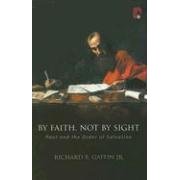
“The central soteriological reality is union with the exalted Christ by Spirit-created faith. That is the nub, the essence, of the way or order of salvation for Paul. The center of Paul’s soteriology, at the center of his theology as whole, then, is neither justification by faith nor sanctification, neither the imputation of Christ’s righteousness nor the renewing work of the Spirit. To draw that conclusion, however, is not to “de-center” justification (or sanctification), as if justification is somehow less important for Paul than the Reformation claims. Justification is supremely important, it is absolutely crucial in Paul’s gospel of salvation” (cf.Eph.1:13). Deny of distort his teaching on justification and that gospel ceases to be gospel; there is no longer saving “good news” for guilty sinners. But no matter how close justification is to the heart of Paul’s gospel, in our salvation, as he sees it, there is an antecedent consideration, a reality, that is deeper, more fundamental, more decisive, more crucial: Christ and our union with him, the crucified and resurrected, the exalted, Christ.
[1] pg. 43 From Richard Gaffin’s “By Faith, Not by Sight: Paul and the Order of Salvation”
Friday, October 27, 2006
This is just sad
My fellow PCUSAer, (Backwood Presbyterian) got kicked out of Dr. Michael McMahon's message board (www.apuritansmind.com) because he is a member of the PCUSA. I echo BP in his exhortation not to use any more of Dr. McMahon's services.
Monday, October 16, 2006

Understanding God’s Wrath

In Leon Morris’s book The Apostolic Preaching of the Cross, he gives us some insights on how to think about God’s wrath.
Friday, October 13, 2006

Saturday, October 07, 2006
WJDFW – You Must Be Born Again
“Jesus answered…”Do not marvel that I said to you, “You must be born again”- John 3:5 and 7
[1] pg 37-39
Thursday, October 05, 2006
What Jesus Demands From the World Part 1
I just got my copy of John Piper’s new book, “What Jesus Demands from the World.” In my excitement, I just finished the introductory chapter of the book, where Piper describes his aim for the book in typical Piper-ish fashion:
I can’t wait to dive more into this book and to have my soul satisfied with the presence of God.
Tuesday, October 03, 2006
The Drama of Scripture

“The Drama of Scripture: Finding Our Place in the Biblical Story” by Craig Bartholomew and Michael Goheen is probably the best book I have read all year. In Bartholomew and Goheen’s book, it sets out to help Christians find their purpose within the larger biblical story by organizing the story into a six-act structure:
Act 1: God Establishes His Kingdom: Creation
Act 2: Rebellion in the Kingdom: Fall
Act 3: The King Chooses
Scene 1 A People for the King
Scene 2 A Land for His People
Interlude: A Kingdom Story Waiting for Ending: The Intertestamental Period
Act 4: The Coming of the King: Redemption Accomplished
Act 5: Spreading the News of the King: The
Scene 1 From
Scene 2 And into All the World
Act 6: The Return of the King: Redemption Completed [1]
Not only is this book helpful through it’s six-act structure, in my opinion, it also seems to be making the right emphasis within the larger biblical story. The authors states their 3 emphases as:
1. Comprehensive scope of God’s redemptive work in creation.
“First, we stress the comprehensive scope of God’s redemptive work in creation. The biblical story does not move toward the destruction of the world and our own “rescue” to heaven. Instead, it culminates in the restoration of the entire creation to its original goodness.” [2]
2. The believer’s own place within the biblical story.
“Second, we emphasize the believer’s own place within the biblical story. Some refer to four questions as foundational to a biblical worldview: “Who am I?” “Where am I?” “What’s wrong?” “What’s the solution?” Tom Wright adds an important fifth question: “What time is it?”…As part of our telling of the Bible’s grand story, we will explore the biblical answers to these five questions. [2]
3. Centrality of
“Third, we highlight the centrality of mission within the biblical story. The Bible narrates God’s mission to restore the creation.
[1] pg. 27
[2] pg.12-13
Sunday, September 24, 2006
The Uneasy Conscience
Some years ago, Carl Henry challenged the evangelical community, in particular the fundamentalist, to be more active in the world's social concerns in his book entitled “The Uneasy Conscience of Modern Fundamentalism”.
Henry illustrates the need for evangelical to engage with the culture with the following story:
“In a company of more than one hundred representative, evangelical pastors, the writer proposed the following questions: “How many of you,during the past six months, have preached a sermon devoted in large part to a condemnation of such social evils as aggressive warfare,racial hatred and intolerance, the liquor traffic, exploitation of labor or management, erance, or the like-a sermon containing not merely an incidental or illustrative reference, but directed mainly against such evils and proposing the framework in which you think solution is possible?” Not a single hand was raised in response.” [1]
But not only does Henry want evangelical to be active in the societal problems, but he wishes for those action to be grounded in deep biblical reflections. Richard Mouw writes in the foreword:
“Carl Henry’s call to action in the 1940s was not a mere summons to activism. It was an invitation to an evangelical cultural involvement that was based solidly on the kind of profound theological reflection that could only be sustained by a social program that was closely linked to a systematic commitment to the nurturing of the life of the mind. And while the evangelical academy has known much scholarly success in recent decades, there is often a considerable disconnect between grassroots evangelical activism and carefully reasoned theological orthodoxy.” [2]
Finally Henry reminds Christians that only the redemptive power in the gospel can save our society. He writes:
“The evangelical task primarily is the preaching of the Gospel, in the interest of individual regeneration by the supernatural grace of God,in such a way that divine redemption can be recognized as the best solution of our problems, individual and social”. [3]
I highly recommend this book, as a reminder to Christians that we have the only solution to redeem the world. May God give our churches and individuals the wisdom and creativity to use the gospel to solve the problems of the world.
[1] pg. 4
[2] pg. xiii
[3] pg. 89
Henry illustrates the need for evangelical to engage with the culture with the following story:
“In a company of more than one hundred representative, evangelical pastors, the writer proposed the following questions: “How many of you,during the past six months, have preached a sermon devoted in large part to a condemnation of such social evils as aggressive warfare,racial hatred and intolerance, the liquor traffic, exploitation of labor or management, erance, or the like-a sermon containing not merely an incidental or illustrative reference, but directed mainly against such evils and proposing the framework in which you think solution is possible?” Not a single hand was raised in response.” [1]
But not only does Henry want evangelical to be active in the societal problems, but he wishes for those action to be grounded in deep biblical reflections. Richard Mouw writes in the foreword:
“Carl Henry’s call to action in the 1940s was not a mere summons to activism. It was an invitation to an evangelical cultural involvement that was based solidly on the kind of profound theological reflection that could only be sustained by a social program that was closely linked to a systematic commitment to the nurturing of the life of the mind. And while the evangelical academy has known much scholarly success in recent decades, there is often a considerable disconnect between grassroots evangelical activism and carefully reasoned theological orthodoxy.” [2]
Finally Henry reminds Christians that only the redemptive power in the gospel can save our society. He writes:
“The evangelical task primarily is the preaching of the Gospel, in the interest of individual regeneration by the supernatural grace of God,in such a way that divine redemption can be recognized as the best solution of our problems, individual and social”. [3]
I highly recommend this book, as a reminder to Christians that we have the only solution to redeem the world. May God give our churches and individuals the wisdom and creativity to use the gospel to solve the problems of the world.
[1] pg. 4
[2] pg. xiii
[3] pg. 89
Sunday, September 17, 2006
Saturday, September 16, 2006
Skinny Models Banned from Catwalk
"Madrid's fashion week has turned away underweight models after protests that girls and young women were trying to copy their rail-thin looks and developing eating disorders.
Organizers say they want to project an image of beauty and health, rather than a waif-like, or heroin chic look." [1]
[1] From CNN
Thursday, September 14, 2006
Piper's New Book: "What Jesus Demands from the World"
You can read and preview the book online here.

The four Gospels are filled with demands straight from the mouth of Jesus Christ. These demands are Jesus’ way of showing us who he is and what he expects of us. They are not the harsh demands of a taskmaster. For example, the demand that we come to Jesus is like the demand of a father to his child in a burning window, “Jump to me!” Or like the demand of a rich, strong, tender, handsome husband to an unfaithful wife, “Come home!” What Jesus demands from the world can be summed up as: “Trust and treasure me above all.” This is good news!
In What Jesus Demands from the World, John Piper has gathered many of Jesus’ demands from the four Gospels. He begins with an introduction that puts the demands in a redemptive-historical context, then concisely examines each demand. The result is an accessible introduction for thoughtful inquirers and new believers, as well as meditative meat for veteran believers who want to know Jesus better.
“The Christian gospel is more than just a wonderful offer of saving grace; it is a demand for supreme loyalty, for surrender to the lordship of Jesus. We forget this too easily in our contemporary church, besieged as we are by a philosophy of pluralism that rejects ultimate authority and a culture of rights that scorns submissiveness. But John Piper reminds us of the real truth: obedience to Christ’s commands is our absolute duty; yet, paradoxically, in his service is perfect freedom and joy!”William J. U. Philip, Minister, St George’s-Tron Church, Glasgow, Scotland, UK
“John Piper reveals in his ‘Word to Biblical Scholars’ his familiarity with the literature and subject matter of the life and teachings of Jesus, and in his comments on the individual demands of Jesus he applies them to everyday living.”Robert H. Stein, Senior Professor of New Testament Interpretation, Southern Baptist Theological Seminary
“This is now my favorite book by John Piper. In the best tradition of Adolf Schlatter’s Do We Know Jesus? and his ‘hermeneutic of perception,’ What Jesus Demands from the World has changed my life and will certainly change yours because it is based on the pure words of Jesus as revealed in the four Gospels. A must-read for every true follower of Christ.”Andreas J. Köstenberger, Editor, Journal of the Evangelical Theological Society; Professor of New Testament and Director of Ph.D. Studies, Southeastern Baptist Theological Seminary
“This book is a special gift from the pen of John Piper. How long has it been since you carefully reflected upon the authoritative commands of Christ? Through these pages you will encounter the Savior and experience the transforming effects of the gospel. Few endeavors are more worthy of your time.”C. J. Mahaney, Sovereign Grace Ministries
“Scholars, popularists, and now even novelists are falling over each other today in a blind passion to discover an alternative Jesus to the One so magnificently portrayed in the biblical Gospels. In stark and refreshing contrast John Piper clear-sightedly grasps the obvious—the biblical Jesus is worth living for and dying for.”Sinclair Ferguson, Senior Minister, The First Presbyterian Church, Columbia, South Carolina
“This is a peculiar book. It assumes that the four Gospels are true and unified. It assumes that Jesus not only does things for us but also makes demands of us. And it assumes that Jesus has authority over everyone regardless of their religion, gender, race, income, sexuality, nationality, or culture. You will likely not agree with every point. But you will hear from a Jesus who is more than a soft-spoken, effeminate, marginalized, Galilean hippie-peasant in a dress and has the peculiar notion that he alone is Lord.”Mark Driscoll, Pastor, Mars Hill Church, Seattle
The four Gospels are filled with demands straight from the mouth of Jesus Christ. These demands are Jesus’ way of showing us who he is and what he expects of us. They are not the harsh demands of a taskmaster. For example, the demand that we come to Jesus is like the demand of a father to his child in a burning window, “Jump to me!” Or like the demand of a rich, strong, tender, handsome husband to an unfaithful wife, “Come home!” What Jesus demands from the world can be summed up as: “Trust and treasure me above all.” This is good news!
In What Jesus Demands from the World, John Piper has gathered many of Jesus’ demands from the four Gospels. He begins with an introduction that puts the demands in a redemptive-historical context, then concisely examines each demand. The result is an accessible introduction for thoughtful inquirers and new believers, as well as meditative meat for veteran believers who want to know Jesus better.
“The Christian gospel is more than just a wonderful offer of saving grace; it is a demand for supreme loyalty, for surrender to the lordship of Jesus. We forget this too easily in our contemporary church, besieged as we are by a philosophy of pluralism that rejects ultimate authority and a culture of rights that scorns submissiveness. But John Piper reminds us of the real truth: obedience to Christ’s commands is our absolute duty; yet, paradoxically, in his service is perfect freedom and joy!”William J. U. Philip, Minister, St George’s-Tron Church, Glasgow, Scotland, UK
“John Piper reveals in his ‘Word to Biblical Scholars’ his familiarity with the literature and subject matter of the life and teachings of Jesus, and in his comments on the individual demands of Jesus he applies them to everyday living.”Robert H. Stein, Senior Professor of New Testament Interpretation, Southern Baptist Theological Seminary
“This is now my favorite book by John Piper. In the best tradition of Adolf Schlatter’s Do We Know Jesus? and his ‘hermeneutic of perception,’ What Jesus Demands from the World has changed my life and will certainly change yours because it is based on the pure words of Jesus as revealed in the four Gospels. A must-read for every true follower of Christ.”Andreas J. Köstenberger, Editor, Journal of the Evangelical Theological Society; Professor of New Testament and Director of Ph.D. Studies, Southeastern Baptist Theological Seminary
“This book is a special gift from the pen of John Piper. How long has it been since you carefully reflected upon the authoritative commands of Christ? Through these pages you will encounter the Savior and experience the transforming effects of the gospel. Few endeavors are more worthy of your time.”C. J. Mahaney, Sovereign Grace Ministries
“Scholars, popularists, and now even novelists are falling over each other today in a blind passion to discover an alternative Jesus to the One so magnificently portrayed in the biblical Gospels. In stark and refreshing contrast John Piper clear-sightedly grasps the obvious—the biblical Jesus is worth living for and dying for.”Sinclair Ferguson, Senior Minister, The First Presbyterian Church, Columbia, South Carolina
“This is a peculiar book. It assumes that the four Gospels are true and unified. It assumes that Jesus not only does things for us but also makes demands of us. And it assumes that Jesus has authority over everyone regardless of their religion, gender, race, income, sexuality, nationality, or culture. You will likely not agree with every point. But you will hear from a Jesus who is more than a soft-spoken, effeminate, marginalized, Galilean hippie-peasant in a dress and has the peculiar notion that he alone is Lord.”Mark Driscoll, Pastor, Mars Hill Church, Seattle
Wednesday, September 13, 2006
Prosperity Theology

This week's issue of Time magazine has an article on the "prosperity theology" - a message that God promises Christian's material wealth if they are faithful to him, entitled "Does God Want You to Be Rich?".
Al Mohler has a good quote on why "prosperity theology" is so popular in America. He writes:
"Prosperity theology is fueled by the combination of Pentecostal teaching and American consumerism. Our culture of material abundance (and consumerist appetites) is fertile ground for the emergence of this distorted and corrupted teaching. Jesus never promised His disciples material security, much less material prosperity. The benefits of the Gospel of Christ are redefined in terms of material and financial blessings."
Justin Taylor has an interesting proposition on how to react against this "prosperity theology":
"What can we do about this? Very few, if any of us, will be able to have personal contact with someone like T.D. Jakes or Joel Osteen. And most boycotts don't work. But why not write a letter or try to meet with the manager of your local Christian bookstore if they sell books like this, seeking to persuade them that selling books like this is a disservice to the body of Christ? It would be a good way to practice being an ambassador of Christ, it would seek to serve the church, and it's something that might actually make a difference."
Subscribe to:
Posts (Atom)
